15 Days
Grade:Challenging
USD $1350



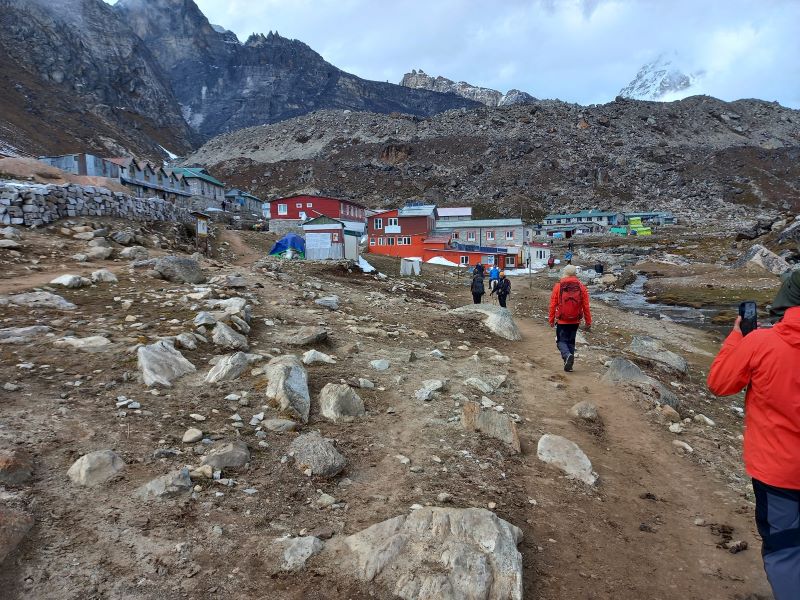
Lobuche is a small mountain village located in Northeastern Nepal, in the Khumbu region. Elevated at an altitude of 4,940 meters, it is a common acclimatization point during some of the classic Everest region treks.
The village lies against the stunning backdrop of the Khumbu glacier, offering breathtaking sights of Mount Ama Dablam, Lhotse, Everest, and Nuptse. Besides, its location between Dingboche and Gorakshep makes it a perfect spot to view other mighty peaks such as Pumori, Lingtren, and Khumbutse. Furthermore, the area around the village comprises sharp alpine terrain with rock, ice, and glacial moraines providing a sense of raw and untamed wilderness.
Lobuche village is equally rewarding in terms of culture and traditions. The brave Sherpas are the main ethnic group of the place. You will be exposed to ancient heritage and traditional practices of the villagers. You can indulge in their local cuisines, such as Rildok, Shyakpa, Thukpa, and Tingmo. Moreover, you may get to observe festivals like Losar in February or March and Mani Rimdu in October or November.
Similarly, the village provides basic teahouses and lodges for trekkers on their way to the Everest Base Camp trek and the Everest Three Pass trek. Furthermore, its location makes it a perfect preparation spot before ascending to Gorak Shep during these iconic journeys.
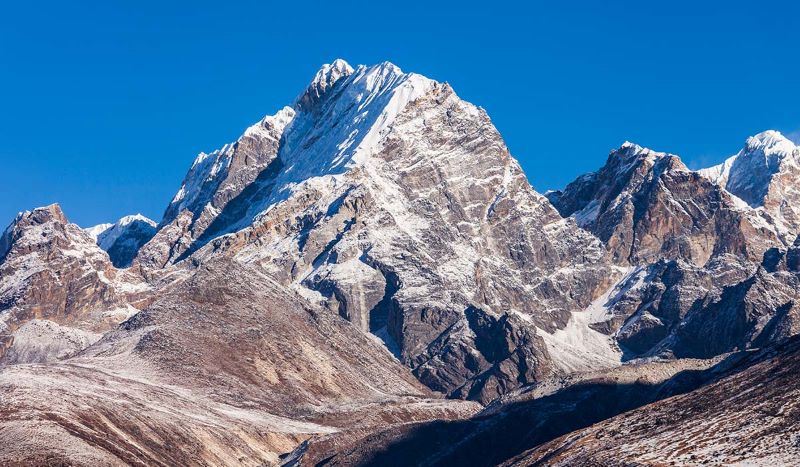
Lobuche village serves as a base camp for trekkers aiming for the Lobuche peak climbing. Some prefer to take the route from Lukla to Namche Bazaar, then to Tengboche, followed by Dingboche, Lobuche, and then finally the summit. On the other hand, some combine it with the Everest Base Camp, turning it into an EBC trek with Lobuche Peak climbing. Regardless of the route, Lobuche village acts as a key point right before the summit.
Climbing the Lobuche East peak (6,119 meters) is slightly less difficult than climbing the Lobuche West Peak (6,145 meters). This is because the west peak features much steeper sections of ice and rock. Moreover, basic climbing skills, such as fixed ropes, are enough for East Peak, but West Peak requires a bit more technical skill and demands advanced rope skills. Therefore, climbing the Louche East Peak is more suitable for beginners. Whereas the climb of the Lobuche West Peak is ideal for experienced mountaineers.
Lobuche is not just a village but a strategic resting point during several Everest region endeavors. It sits at an altitude of 4,940 meters, making it a perfect place for physiological adjustment and preparation before the more demanding sections of the journey. In the iconic Everest Base Camp trek, you spend at least one night at the Lobuche village. After an almost week-long trek, this stop is essential, as the next day you will head towards the base camp (5,356 meters).
Similarly, in the Everest Three High Passes trek, Lobuche is the best resting spot after conquering the highest pass of the journey, the Kongma La pass (5,535 meters). Sleeping in the lower elevations before and after a significant elevation gain is a fundamental principle of high-altitude treks. Therefore, most trekkers spend a night at Lobuche (4,910 meters) to prepare themselves for climbing to Gorak Shep (5,180 meters) the next day.
Lobuche is a high-altitude settlement village in the Everest region of Nepal. It is located at an altitude of 4,940 meters and is the second-to-last village on the Everest Base Camp trek.
Many trekkers are seen combining the Gokyo Lakes and the Everest Base Camp trek. In this journey, Lobuche acts as a bridge. After completing the high-altitude Gokyo Lakes trek, instead of climbing down to Dole, you trek to Thagnak. Then cross the Cho La pass, followed by a descent to Lobuche. After that, the Everest Base Camp trek starts
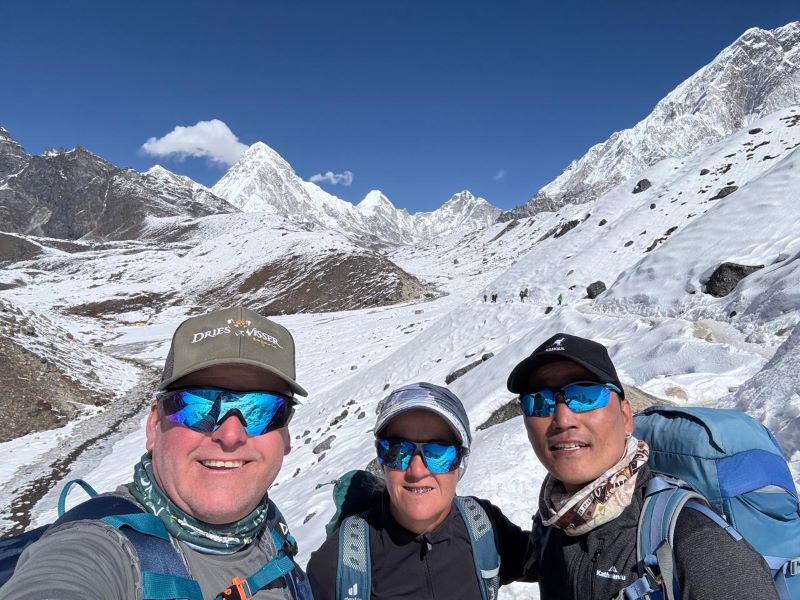
As one of the major landmarks in several Everest treks, Lobuche offers essential food and accommodation services to trekkers. Typical meals in teahouses in Lobuche are simple but high in nutrition and filling. Every place serves the staple Nepali food, Dal Bhat Tarkari. It is a set that comes with steamed white rice, lentil soup, veggies, and aachar (pickle). They serve other carb-heavy dishes such as chowmein, thukpa, and mo:mo (steamed dumplings that have minced meat and vegetable fillings). To help with acclimatization, teahouses offer garlic soup, tomato soup, and ginger soup. The most common breakfast comprises omelettes, boiled eggs, Tibetan bread, porridge, etc. Furthermore, teahouses have a variety of tea, such as ginger tea, lemon tea, black tea, and milk tea. You can also try traditional Sherpa tea, like Salt Butter tea, also known as Suja.
Likewise, Lobuche has numerous teahouses and lodges providing simple twin-bed rooms with basic necessities (warm blankets and pillows). Upscaled facilities are limited here because of the high altitude. Teahouses don’t have separately heated rooms. Likewise, they provide shared bathrooms and toilets. Hot showers are offered at a small cost, as they are heated using stoves or solar power. You can keep your electronic devices for charging at a communal charging station. The charging cost typically varies based on the devices, and rates are usually calculated on a per-device, per-hour basis.