

Overview
Highlights Of Panch Pokhari Trek
- Panoramic mountain views. This includes mountains such as Dorje Lakpa, Gaurishankar, Jugal, Rolwaling, and Langtang Lirung.
- The five sacred lakes are the primary attraction. They are located at an altitude of 4,100 meters and are holy pilgrimage sites for Hindus and Buddhists.
- Less commercialization and fewer crowds provide a more authentic trekking experience.
- Explore Sherpa and Tamang culture and traditions, passing through villages like Hyolmo, Bhotang, and Indrawati.
- Get to observe the flora and fauna of the Langtang National Park.
Best Time For Panch Pokhari.
Spring and autumn are the most suitable seasons for the Panch Pokhari trek. The spring period provides warm temperatures, good visibility, and clear skies. Furthermore, flourishing rhododendrons and colorful alpine flowers cover the Panch Pokhari trails.
Autumn brings the best long-distance view as the air is cleared after prolonged monsoon rain. Similarly, the atmosphere is crisp and clear, offering the sharpest sights of the majestic Himalayas. The trekking routes are dry and safe for walking. However, early September can receive occasional rain, so pack trekking gear accordingly.
The monsoon experiences continuous rainfall, making the trekking route slippery and muddy. Likewise, the winter season receives snowfall, and the temperature is very low. However, they provide a quiet and peaceful trekking experience. Therefore, even though you should ideally avoid these two seasons, you can still complete the trek with proper preparation and expert guidance.
Difficulty Level Of The Panch Pokhari Trek?
The Panch Pokhari journey is moderately challenging. It does not demand any technical skills, and trekkers with basic fitness can complete it. The maximum altitude of the trek is 4,100 meters, so there are good chances of acute mountain sickness. However, it still stays lower than the Annapurna Base Camp trek and the Everest Base Camp trek, making it more suitable for beginners.
The trekking route consists of terraced farmlands, villages, and dense forests in the lower to mid region. Likewise, the landscapes shift to alpine meadows and rocky terrain in the higher regions. So, ascent and Descent through these terrains can be physically exhausting.
You need to walk 5 to 6 hours daily on average, which is easy to manage with proper pacing. So, the main difficulty arises from the altitude. Therefore, trekkers should acclimatize enough, eat clean energy-giving foods, and stay hydrated. Beginners should hire a licensed guide for professional navigation and to ensure safety.
Mountain Views
The Panch Pokhari trail follows a high ridgeline for the majority of the journey, which offers some of the best views of the surrounding peaks. Throughout the trek, you are accompanied by Mount Dorje Lakpa, Madiya Peak, and Phurbi Chhyachu of the Jugal Himal range. Similarly, most trekkers hike 200 meters above the Panch Pokhari lakes (4,100 meters) for the sunrise views and 360-degree panorama of the Langtang and Rolwaling Himal range.
Cultural And Spiritual Significance
Panch Pokhari is a holy site for the Hindu and Buddhist people. The Hindus believe the five sacred lakes are blessed by Lord Shiva, so they perform prayers and rituals and present offerings. They say taking a holy dip in the lakes provides spiritual cleansing. During Janai Purnima, devotees from around the world visit to seek blessings.
Furthermore, Hindu men change the sacred thread called janai. This is taken as a purification ritual that washes away impurities of the soul. Similarly, Buddhists see the lakes as a holy place for meditation. The trails are marked by the fluttering prayer flags, chorten flags, mani walls, and small gompas that reflect their cultural values.
Panch Pokhari Trek Itinerary - 8 Days
Cost Include / Exclude
What’s included
- All Permit and necessary paper works
- Transportation from Kathmandu to Chautara / to Kathmandu by Bus.
- 3 Meals a day during the trek with tea / Coffee
- All the accommodations in lodges/tea houses during the treks.
- Trekking Guide: An experienced, helpful, friendly, and English speaking trekking guide (including his well-paid salary, insurance, meals, drinks, accommodation, transportation, etc.)
- Trekking Porters: Carry your Luggage (One Porter for every two clients)
- Trek equipment- Sleeping bag, down jacket, hiking pole , duffel bag
- Adventure Certificate. Trekking Map,
- Medical supplies (first aid kit will be available).
- All Government Taxes and Service Charge.
What’s excluded
- Personal Travel Insurance
- All bar bills and personal expenses (phone call, laundry service, battery recharge, bottle of water, hot water, hot/cold shower, pot of tea, coffee etc.)
- Tips for guide and porter.
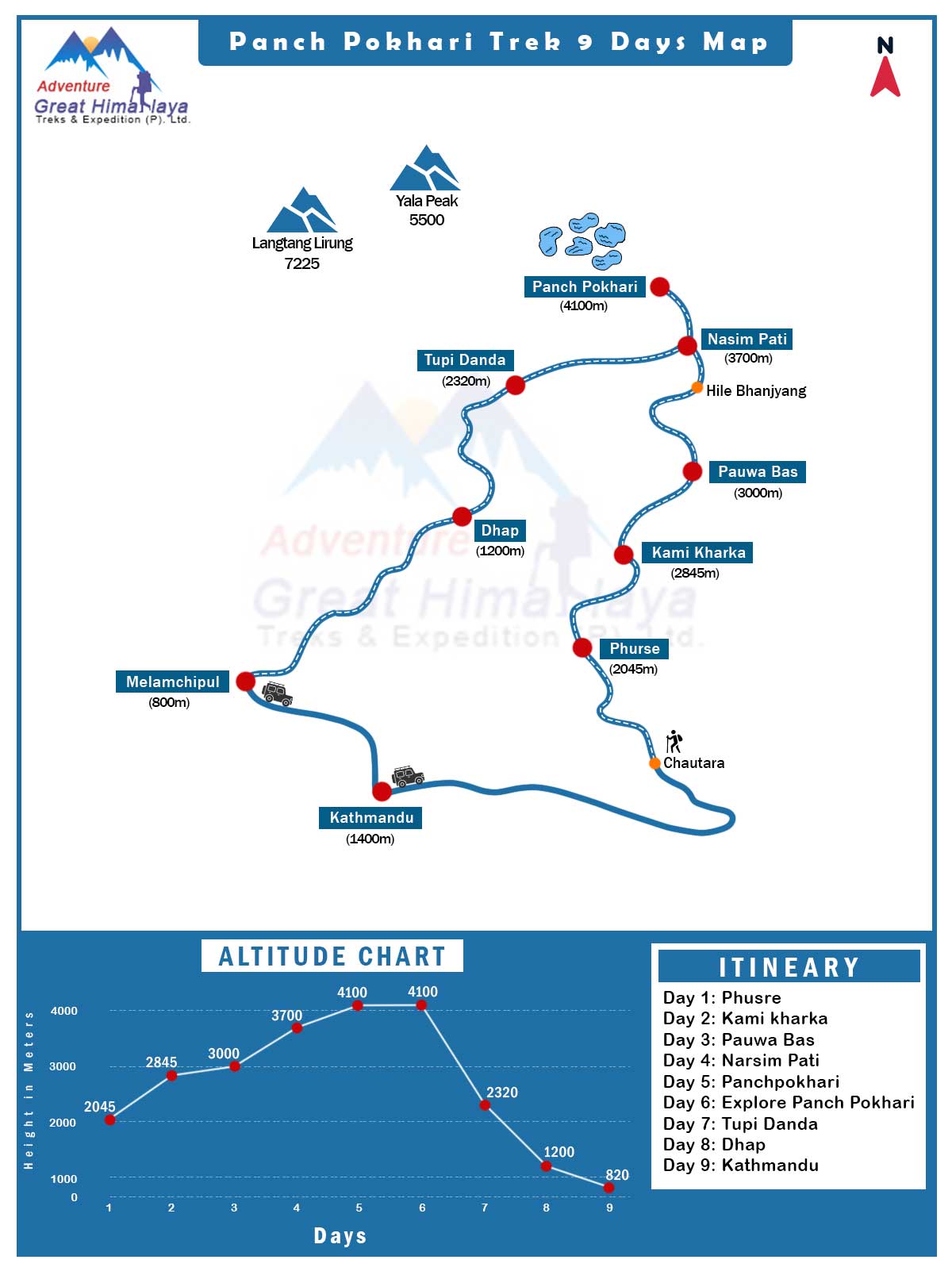
Trip Map