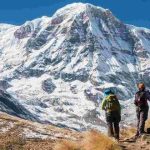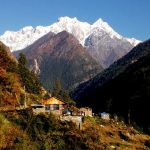


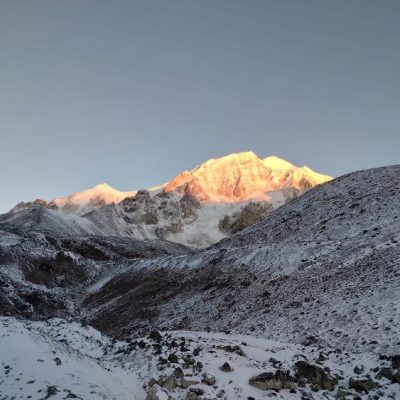
The Manaslu Trek in Nepal is becoming increasingly popular among Himalayan adventure seekers. The Manaslu trek sits in northern Gorkha, tucked against the Tibetan border, and it remains one of the few places in Nepal where a major trekking route still runs through working villages rather than a tourism corridor.
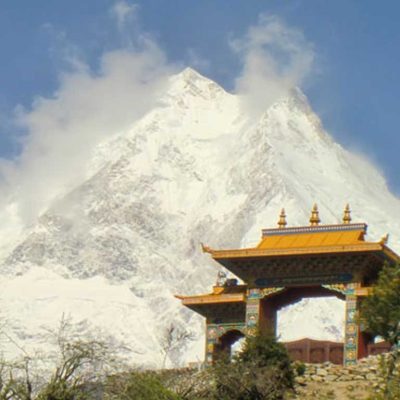
Trails follow the Budhi Gandaki River north from farmland into forest, then into alpine pasture, and finally onto the glacial terrain below Mount Manaslu, which at 8,163 meters (26,781 feet) is the eighth-highest mountain on earth.
You have several ways to experience it. The Manaslu Circuit is the complete loop and the usual first choice. Tsum Valley branches off into a quieter side valley shaped by Tibetan Buddhism. Manaslu Base Camp brings you up close to the glaciers. Longer itineraries combine them.
Lodges here are simpler than on the Everest or Annapurna trails, and that is part of the appeal rather than a drawback.
Manaslu Trekking Region at a Glance
| Detail | Information |
|---|---|
| Location | Northern Gorkha District, Nepal |
| Main mountain | Mount Manaslu, 8,163 m / 26,781 ft |
| World ranking | Eighth-highest mountain |
| Protected area | Manaslu Conservation Area |
| Main routes | Manaslu Circuit, Tsum Valley, Manaslu Base Camp |
| Highest point on the Circuit | Larkya La, 5,106 m / 16,752 ft |
| Landscape | River gorges, terraced farmland, forest, alpine meadow, glacier |
| Culture | Nubri and Tsum communities, strong Tibetan Buddhist tradition |
| Accommodation | Locally run teahouses and mountain lodges |
| Access | Road journey from Kathmandu, then trekking |
| Best seasons | Spring and autumn |
| Permit status | Restricted area, licensed guide required |
Where is the Manaslu Trek In Nepal?
Manaslu lies in north-central Nepal, mostly inside Gorkha District, with the mountain itself standing near the boundary between Gorkha and Manang. It is roughly 64 kilometres (40 miles) east of Annapurna, close enough that the two trekking regions connect on foot but far enough that they feel entirely separate.
The journey starts with a drive from Kathmandu to a trailhead in the lower Budhi Gandaki valley. The exact starting village shifts depending on road conditions and how far vehicles can get in the season, so check your Manaslu trek itinerary rather than assuming a fixed departure point.
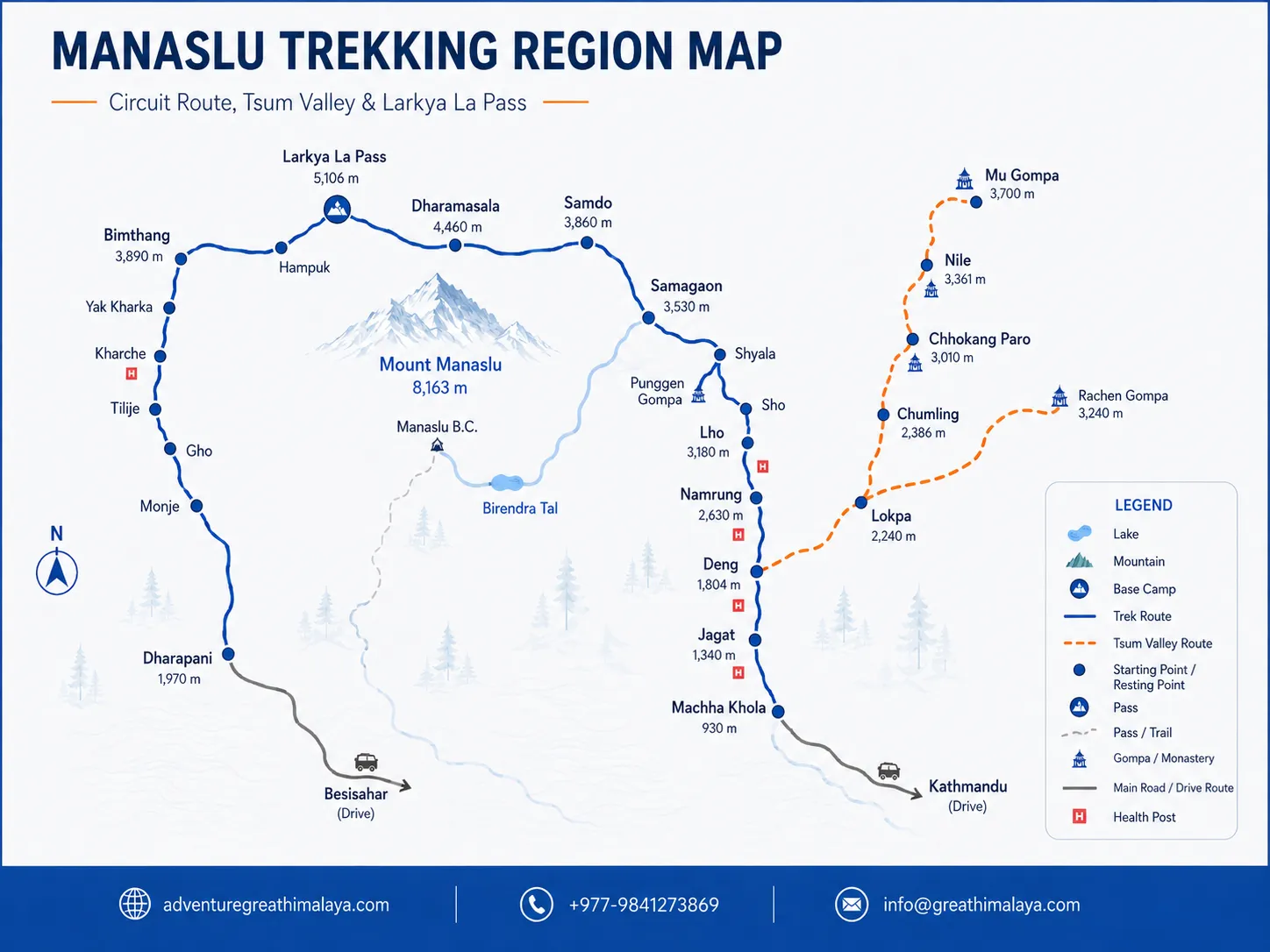
From there, the trail heads north along the river, deep inside the Manaslu Conservation Area, home to rare (and adorable) snow leopards and red pandas. Circuit routes eventually cross Larkya La and drop down through Bhimtang to Dharapani, where you join the Annapurna trail network. Tsum Valley splits off northeast well before any of that.
Because the region climbs from subtropical valley floor to high pasture near the Tibetan border, a Manaslu trek covers an unusually wide range of altitude, climate, and terrain. The sense of remoteness builds as you walk: the road falls away behind you, the villages get smaller, and the mountains close in.
Best Manaslu Treks in Nepal
Which route suits you comes down to how much time you have and what you actually want out of the trip: high mountain scenery, cultural depth, or a long journey that delivers both.
Manaslu Circuit Trek
If this is your first time in the region, take the Circuit. It offers the best overall experience because the trail gradually moves from farmland and forest into glacial terrain. The crux is Larkya La crossing at 5,106 meters (16,752 feet), which is the most challenging part. From the pass, the trail drops steeply toward Bhimtang and eventually meets the Annapurna trail at Dharapani. What you get is a genuine progression, farmland to forest to glacier, rather than an out-and-back to a single viewpoint.
Tsum Valley Trek
Tsum trades the high pass at Larkya La for cultural depth. The trail leaves the main circuit and climbs into a valley that has kept its Tibetan Buddhist traditions largely intact, partly because it stayed closed to outsiders until 2008. Monasteries, mani walls, chortens, and stone villages define the walking here. Mu Gompa and Rachen Gompa are the two best-known religious sites.
Manaslu Base Camp Trek
Choose the Manaslu Base Camp Trek if getting closer to Mount Manaslu and its glaciers is your main priority. The journey follows much of the Circuit but adds an excursion from Samagaun towards Birendra Lake and Manaslu Base Camp. It then continues through Samdo and across Larkya La, combining the complete circuit experience with a closer view of the mountain.
Manaslu Circuit with Tsum Valley
For the most complete journey through the region, combine Tsum Valley with the Manaslu Circuit. The route first explores Tsum’s monasteries, settlements and Tibetan Buddhist traditions before returning to the Budhi Gandaki trail and continuing over Larkya La. If you have 3 weeks to spare and want both cultural depth and high-altitude mountain scenery, this is it for you.
What Makes Trekking Around Manaslu Different?
Manaslu’s character comes from how much it changes between the first day and the last, and from the fact that the villages along the way are not there because of trekkers. Those are real, lived-in communities that existed a long time before tourists came to visit.
The landscape changes as you climb.
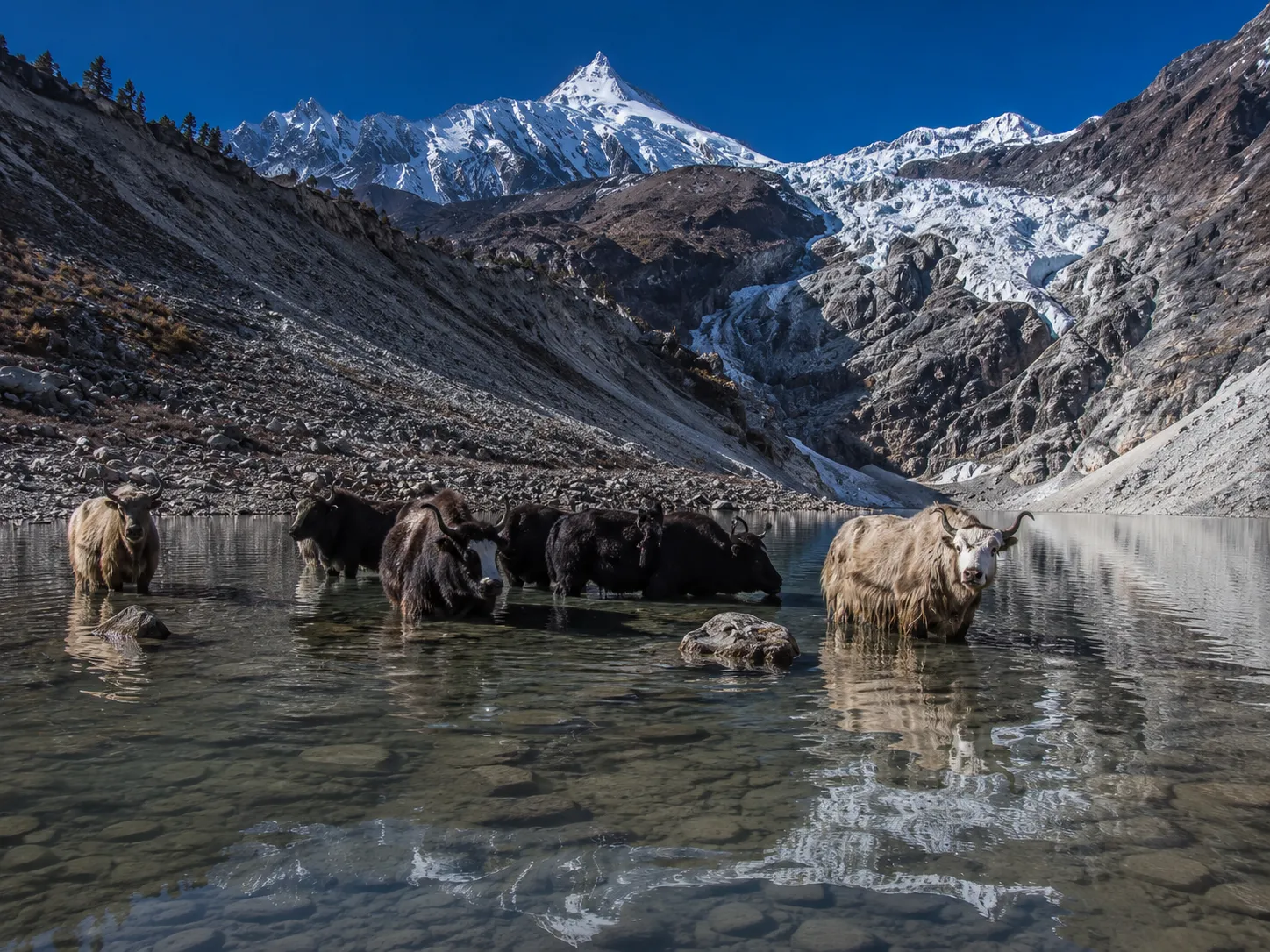
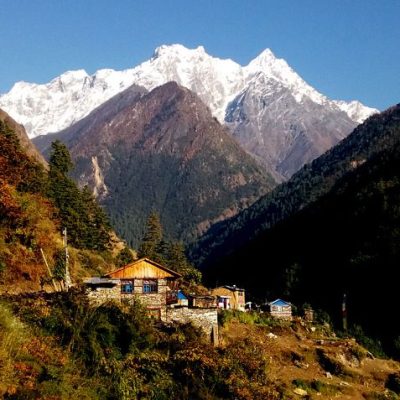
The lower trail runs through terraced fields, warm river valleys, and forested hillsides. Much of the early walking follows the Budhi Gandaki through narrow gorges, crossing and recrossing on suspension bridges strung high above the water.
Higher up, farmland gives way to pine and rhododendron, then to open pasture and rocky ground. Past Samagaun and Samdo the surroundings turn cold and exposed: glacier, moraine, and snow-covered ridgeline in every direction.
That gradual shift is the region’s strongest feature. You are not looking at variations of the same view for two weeks. The landscape reorganizes itself every couple of days.
The villages are not just overnight stops.
The villages of Jagat, Namrung, Lho, Samagaun, Samdo, and Bhimtang welcome all tourists, but are not specifically built for tourists. They are actual places where people have spent their lives for centuries, and each shows a different version of life in the Budhi Gandaki and Nubri valleys.
Stone houses, worked fields, small monasteries, and family-run lodges are all ordinary surroundings here, not attractions. In the upper villages, people still depend on farming, livestock, trade, and a short tourism season that lasts a few months of the year.
Walking gives you time to notice it. You pass people working in fields, moving supplies between settlements, running the lodges you sleep in. The experience feels connected to the communities rather than staged alongside them.
Tibetan Buddhist culture is visible everywhere.
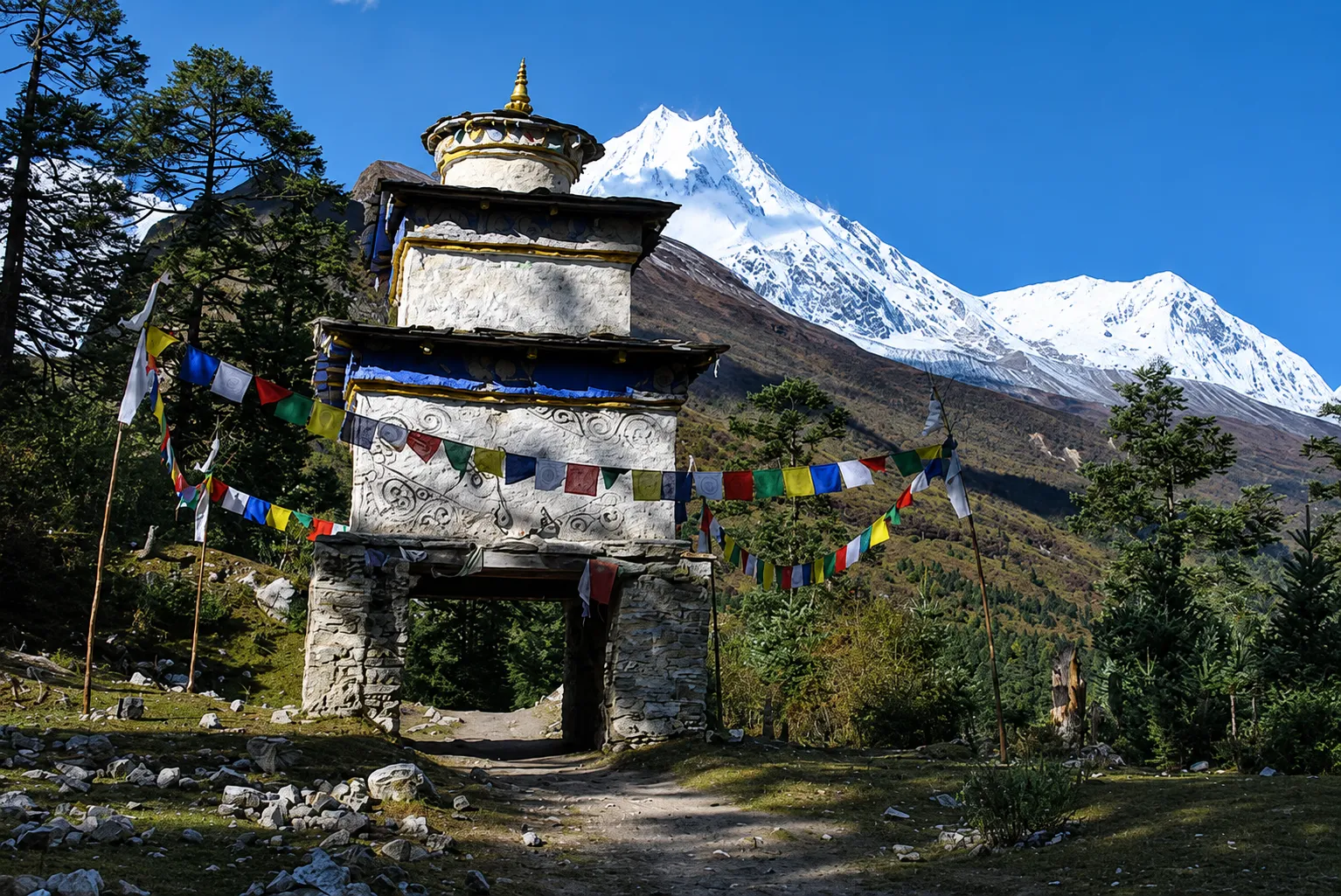
The Tibetan Buddhist character grows stronger the higher you go. Mani walls, chortens, prayer wheels, and monasteries appear at village entrances and along the trail itself.
Nubri Valley forms part of the standard Circuit experience. Tsum goes deeper. Those who take that route can visit Mu Gompa & Rachen Gompa and spend real time in settlements whose connections with Tibet go back centuries.
Treat these places as what they are: active parts of local religious life. When you visit, be respectful toward Tibetan traditions: walk clockwise around mani walls and chortens, dress modestly inside monasteries, and ask before photographing people or ceremonies.
Mountain views and natural landmarks.
Mount Manaslu is the defining peak, but it is not in view for the entire trek. The best perspectives come around Lho, Shyala, and Samagaun, where it rises directly above the ridgelines and glaciers.
Near Samagaun, side trips lead to Birendra Lake and toward Manaslu Base Camp. Both bring you closer to the glacial landscape without any climbing.
Further along, the approach to Larkya La takes you into genuine high-mountain terrain: moraine, ice, and thin cold air. Depending on the route and the weather, the wider skyline takes in Himalchuli, Ngadi Chuli, Cheo Himal, and Himlung Himal.
What to Expect on the Trail?
Manaslu feels more remote than Nepal’s busier trekking regions. But food, lodging, and communication all exist along the main routes. They just get simpler as you climb.
Teahouses and Meals
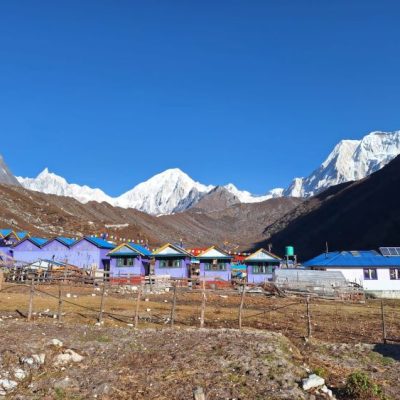
Most nights in Manaslu trek are spent in locally run teahouses. Rooms typically have two beds, mattresses, pillows, and blankets. Lower villages sometimes offer attached bathrooms, but as you go higher up, shared facilities are the norm. Heating is also limited to the dining room, so bedrooms get genuinely cold at night.
Meals are cooked at the lodge where you stay. Dal bhat, fried rice, noodles, potatoes, soup, pasta, eggs, and Tibetan bread are on most menus. But in remote settlements like Samdo and Dharamsala, the choices narrow even further.
When a lodge is busy, food takes a while because supplies and kitchen capacity are both limited. Ordering dinner soon after you arrive, and choosing breakfast the night before, saves a lot of waiting.
Trail Conditions and Facilities
Conditions vary enormously across a single trek. The lower sections include stone paths, riverbank walking, forest trail, suspension bridges, and steady climbs between hillside villages. Rain turns parts of it to mud while dry weather turns the same stretches dusty.
Higher up, the path gets rockier and more exposed. Snow and ice can affect the sections near Larkya La depending on the season. A good guide will adjust the day’s plan when weather or trail conditions make the original schedule impractical or dangerous.
Electricity reaches most settlements, often through small hydro or solar systems, and charging your devices usually costs extra at altitude. Mobile signal and internet are inconsistent, so it is better to plan for days without either of those.
Carry cash. Card payments and working ATMs may be unavailable once you leave the road. Bring enough Nepalese rupees for drinks, snacks, charging, Wi-Fi, hot showers, and anything else personal.
Crowds and Atmosphere
Fewer trekkers come here than to the busiest Everest and Annapurna routes, and long stretches of trail can feel genuinely quiet outside the peak weeks. During the busiest periods, several groups may share a village or cross Larkya La on the same morning, and rooms fill fast because remote settlements have limited beds.
What actually distinguishes the trail’s atmosphere is that you are walking through working mountain communities. Village life continues around the trekking groups rather than revolving around them.
Altitude and Acclimatization
Altitude becomes a serious health factor on any route that enters the upper valley or crosses Larkya La at 5,106 meters. The altitude gain is gradual till you reach Samagaun and Samdo, but elevations climb sharply once you cross them.
Spend enough time in the upper villages to allow your body to adjust before the trek’s highest section. Acclimatization hikes from Samagaun are particularly useful because you gain altitude during the day, sleep at a lower elevation, and see Birendra Lake or Pungyen Gompa while you are at it.
Fitness alone does not determine how you handle altitude. So walk at a steady pace, tell your guide honestly how you feel, and never treat the printed schedule as more important than your condition.
Choosing the Right Manaslu Trek for You
| Your priority | Recommended trek | The trade-off |
|---|---|---|
| First visit to the region | Manaslu Circuit | Best all-round mix, but no Tsum Valley |
| Culture and monasteries | Tsum Valley | Does not cross Larkya La |
| Glaciers and mountain views | Manaslu Base Camp | Extra walking days from Samagaun |
| The most complete experience | Circuit with Tsum Valley | Needs around three weeks and a larger budget |
| Limited time | 12-Day Circuit | Little room for rest, delays, or acclimatization |
| A longer Himalayan challenge | Manaslu & Annapurna Circuit | Two demanding circuits back to back |
Do not pick the shortest itinerary purely because it fits your leave dates. A few extra days buys better acclimatization, more time in the villages, and extra time to account for road or weather problems that regularly happen here.
Your experience matters too. First-time high-altitude trekkers do best on a well-paced Circuit. Combined routes suit people already comfortable with consecutive long days.
Planning Your Manaslu Trek Nepal
Manaslu takes more planning than most Nepali treks because the routes are remote, the facilities are basic, and both roads and weather can interfere. Choose your route around your available time and fitness, then confirm current permit rules before you book anything.
Best Time to Trek
Spring and autumn are the two workable seasons.
- March to May: May circuit trek comes with green lower forest and rhododendron in bloom.
- September to November: September circuit trek delivers clearer mountain views and drier trails after the monsoon.
Winter trekking is possible but heavy snow and severe cold can close Larkya La. Monsoon means rain, cloud, mud, and transport delays.
Permits and Licensed Guides
Manaslu is a restricted trekking region, which means you cannot trek here independently. Restricted Area Permits are not issued to individuals at the trailhead. They are issued only through a registered Nepali trekking agency, and a licensed guide is mandatory.
Depending on your route, the paperwork can include the Manaslu Restricted Area Permit, a separate Tsum Valley Restricted Area Permit, the Manaslu Conservation Area Permit, the Annapurna Conservation Area Permit, and an agency-issued TIMS card.
Permit charges vary by route, season, and how many days you spend inside the restricted zone.
See current fees: Manaslu trek permit guide
Difficulty and Preparation
Most routes here involve consecutive walking days, uneven ground, and limited facilities. The Manaslu Circuit is demanding mainly because of Larkya La. No technical climbing is required, but the combination of altitude, cold, and a long pass-crossing day deserves respect.
Start training well before departure with regular hiking, stairs, cycling, and some strength work. Walking with the daypack you actually plan to carry is worth more than gym time.
What it Costs
Total cost depends on route length, group size, transport, permit requirements, and what the package includes. A three-week Circuit-plus-Tsum itinerary naturally costs more than a compressed 12-day trip.
Before comparing prices between operators, check what is actually included: Kathmandu accommodation, meals, permits, guide, porter, private transport, airport transfers. A lower headline price often means services have been stripped out.
See the full cost breakdown: Manaslu Circuit trek cost 2026/27.
Packing
Conditions run from warm valley afternoons to freezing mornings above 4,000 meters, so layering matters more than any single item.
The Manaslu Circuit packing list includes moisture-wicking base layers, fleece or insulated mid-layers, a down jacket, a waterproof and windproof shell, broken-in boots, warm hat and gloves, a cold-rated sleeping bag, trekking poles, headlamp, power bank, sun protection, reusable water bottles, and your own medication.
Responsible Trekking in the Manaslu Conservation Area
The Manaslu Conservation Area protects a fragile landscape and the communities living inside it. A few habits make a real difference.
- Spend locally. Stay in locally operated teahouses, buy meals and supplies in the villages, and hire local guides and porters. It keeps tourism income in the region rather than in Kathmandu.
- Cut your waste. Carry a reusable bottle and treat your water rather than buying plastic. Take wrappers, batteries, and anything else non-biodegradable out with you. These villages have almost no waste management, and what gets left behind stays.
- Respect religious sites. Walk clockwise around mani walls and chortens, dress modestly in monasteries, keep your voice down, and follow whatever instructions residents or monks give you. Ask before photographing people, ceremonies, or monastery interiors. A village is somebody’s home.
- Stay on the trail. Avoid disturbing wildlife, livestock, or vegetation. Do not take stones, plants, or religious objects. Wash away from streams and go easy on soap, even biodegradable kinds.
None of this is complicated. Walk slowly, treat the people who live there as neighbors rather than scenery, and leave each place as you found it.
Frequently Asked Questions
Where is the Manaslu trekking region in Nepal?
The Manaslu trekking region lies mainly in northern Gorkha District, close to the Nepal-Tibet border. Most routes follow the Budhi Gandaki valley through the Manaslu Conservation Area, and Circuit treks cross into the Manang side after Larkya La.
Which treks are available in the Manaslu region?
The main options are the Manaslu Circuit, Tsum Valley, Manaslu Base Camp, and the combined Circuit with Tsum Valley. There is also a shorter 12-day Circuit and an extended route continuing into the Annapurna region.
Which Manaslu trek is best for a first-time visitor?
The Manaslu Circuit combines river valleys, traditional villages, mountain views, and the Larkya La crossing in one route, and its pacing suits people new to the region.
How difficult is the Manaslu Circuit Trek?
The Manaslu Circuit is a moderately challenging trek. Long walking days, remote trails, basic facilities and the 5,106-metre Larkya La crossing require good fitness and proper acclimatization. No technical climbing experience is needed.
Do all Manaslu routes cross Larkya La Pass?
No, the standard Tsum Valley Trek does not. The main Circuit and the longer Circuit-based itineraries generally cross the pass before descending toward Bhimtang.
What is the difference between the Manaslu Circuit and Tsum Valley?
The Circuit travels around the Manaslu massif and includes the 5,106-meter Larkya La crossing. Tsum follows a separate branch of the trail with much more emphasis on monasteries, Tibetan Buddhist culture, and traditional settlements.
Can the Circuit and Tsum Valley be combined?
Yes. A combined itinerary explores Tsum first, then rejoins the main Circuit and crosses Larkya La. It suits travelers with around three weeks who want both.
Can I trek Manaslu without a guide?
No. Manaslu is a restricted area, and the Restricted Area Permit is only issued through a registered trekking agency with a licensed guide. Independent trekking is not permitted here.
Are teahouses available throughout the region?
Yes, at the standard overnight stops on established routes. Rooms, meals, and services get simpler at higher elevations, and smaller settlements have limited beds during peak weeks.
How do I choose between a short and an extended itinerary?
Take the shorter route only if you have solid fitness, prior high-altitude experience, and no flexibility on dates. Longer itineraries give you more acclimatization time and absorb weather or road delays without wrecking the trip.
Is Manaslu quieter than Everest and Annapurna?
Generally yes. It receives noticeably fewer trekkers. That said, lodges and the Larkya La trail can still get busy during the main spring and autumn weeks.
Manaslu Trek Region Trips