

Tengboche Monastery
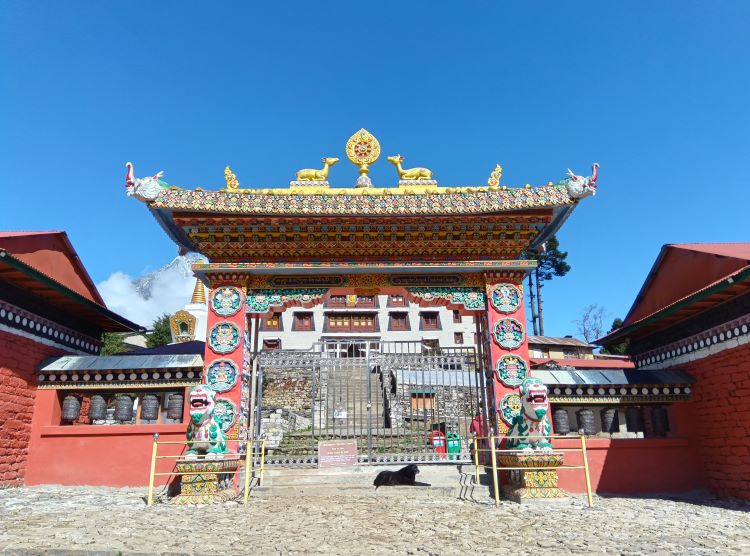
Tengboche/Thyangboche monastery is one of the most sacred Buddhist monasteries in the Khumbu. Moreover, it is the largest monastery of the region. It is also widely recognized as the Dawa Choling gompa. The monastery sits at the top of a ridge, above the meeting point of the Dudh Koshi and Imja rivers. Situated at an altitude of 3,867 meters, it offers a stunning backdrop view of the Himalayas. Built in the 17th century, this gompa still hosts monks’ daily rituals, chants prayers, and celebrates seasonal festivals. More than just a religious structure, it represents the Sherpa’s culture and resilience.
Trekkers can see the colorful prayer flags, chorten, and intricate murals within the monastery. It is also scenically gratifying offering the views of Mount Ama Dablam, Lhotse, and Everest. Tengboche Monastery is a key stopping point for the Everest Base Camp trek and the Everest Three Pass trek. Besides, many travelers visit this spiritual center by modifying the classic Gokyo Lakes. Instead of the normal in-and-out trek, you can add a few extra days to your itinerary and retrace your way back from Gokyo to Dole to Namche. This lets you explore the cultural, architectural, religious, and scenic glory of Tengboche.
Guidelines For Visiting The Tengboche Monastery
As one of the most celebrated and holy monasteries of Khumbu, visitors need to make sure to respect its norms and values. Wear modest clothes when entering the gompa, especially the prayer hall. Do not speak too loudly or show any disruptive behavior. Similarly, visitors are allowed to take photos and videos from the outside, but filming inside is restricted. Check for signs before capturing anything or ask for permission. In the Tengboche monastery, monks and locals pray and chant every morning. Visitors can observe it quietly but avoid disturbing activities such as loud voices and unnecessary movements.
Tengboche On The Major Everest Region Treks
It is the central point and a major highlight of some of the Everest treks. First, the Everest Base Camp trek features a classic itinerary that includes Tengboche as a key overnight stop. Many trekkers visit the gompa, seeking blessings to successfully complete the trek. Second, on the Everest Three High Pass trek, staying in the monastery area serves as a buffer for acclimatization. As trekkers cross the high-altitude passes (Cho La, Renjo La, and Kongma La), it is important to prepare your body for the elevation gain in the coming days. Spending the night in the lower region around the monastery helps the body adjust.
Tengboche Monastery is not part of the standard Gokyo Lakes trek. However, trekkers often include it as a side hike from Namche Bazaar. You can include the Tengboche Monastery at the start of the trek from Namche, visiting it before continuing to Dole. Alternatively, save the visit for the end of the trek by staying overnight at Namche, taking an early morning walk to Tengboche and then continuing to Lukla for the flight to Kathmandu.
Best Season To Visit The Tengboche Monastery
Spring and Autumn are the most ideal seasons to explore the gompa. The weather is stable and the skies are crystal clear, providing a stunning view of Mount Everest, Lhotse, Ama Dablam, and Nuptse. Blooming rhododendron and pine forests adorn the area around the gompa in bright colors in the spring.
Similarly, in the autumn, the air is crisp and clear with excellent long-distance visibility of the mountains from the monastery as the monsoon rain washes out the dust particles. Furthermore, Tengboche monastery celebrates the Mani Rimdu festival in October or November. The celebration takes place with rituals and monks performing masked dances. Therefore, it is a perfect time to combine cultural and visual exploration.
Winter and monsoon are not the best times for a visit due to the cold weather, snowfall, and frequent rainfall. However, these seasons are quieter, presenting more peaceful experiences. Furthermore, whenever there is no precipitation or heavy snowfall, the panoramic views are stunning.
Food and Accommodation Near Tengboche Monastery
Tengboche village offers teahouse and lodge accommodation. They primarily cater to trekkers who choose the Everest Base Camp and the Three High Pass treks. These teahouses offer basic and comfortable rooms with two beds, warm blankets, and pillows. Similarly, they have a communal bathroom and toilet. Hot showers are offered with a small fee. Also, they provide charging stations to charge your phone, cameras, and other electronic devices, with an additional cost typically applied per device on an hourly basis.
Typical foods served in these teahouses are traditional Nepali meals, like dal bhat trakari, noodles, mo:mo, and various potato dishes. Breakfast usually includes eggs (omelet or boiled, or fried), bread, and different kinds of tea. Some places also make pizzas, pasta, and burgers at the trekker’s request (check if their menu incorporates it first).
During the peak trekking season (spring and autumn), Tengboche’s teahouses are full. In such scenarios, trekkers can stay in nearby villages, such as Deboche, Pangboche, Dingboche, Namche Bazaar, etc.