
Start From
$1250 USD per person
Group Discount Price
Number of Travellers
Overview
Gokyo Lake Trekking is another famous trekking trail in Everest region, it is the best trail for viewing the mountains in Himalayan Range, Gokyo Trek is trek to the lakes in Gokyo valley, It is world Highest fresh water system lake at the high altitude 4600m, Trek to Gokyo lake is option of Everest Base camp Trek for those trekkers who seek the Mount Everest views, with 100 of high snowcaped mountains as well as tibetin mountian views.
Gokyo Lakes or Gokyo Valley Treks is a lifetime Adventure trekking that the trekkers experience the Rocky snow scattered land , Gokyo Valley , deep blue alpine lakes surrounded by gigantic High Mountains . Climb to Gokyo Ri, Stand at 5357m altitude , Overview dozens of the high mountains including world tallest peak Mt Everest, and other 8,000 peaks mt Cho Oyu, Lhotse and Makalu
The Gokyo Lake Trek highlight is reaching the summit of Gokyo Ri at 5357m. From the top you get an unbeatable view of Mt Everest, Lhotse, Makalu and Cho Oyu: the 1st, 4th, 5th and 6th highest mountains in the world. You will also have the experience of seeing one of the Khumbu’s most dramatic panoramas – the ice ridge between Cho Oyu and Gyachung Kang. It also offers great view of the longest glacier in Nepal and dramatic view of the Gokyo lakes.
Located in the Everest region, Gokyo valley is one of the most picturesque landmarks. Located on the shore of Dudh Pokhari, the valley is full of beautiful stone houses and meadows. Not just the marvelous view of Mount Everest, it is also home to Ngozumba, Nepal’s largest glacier.
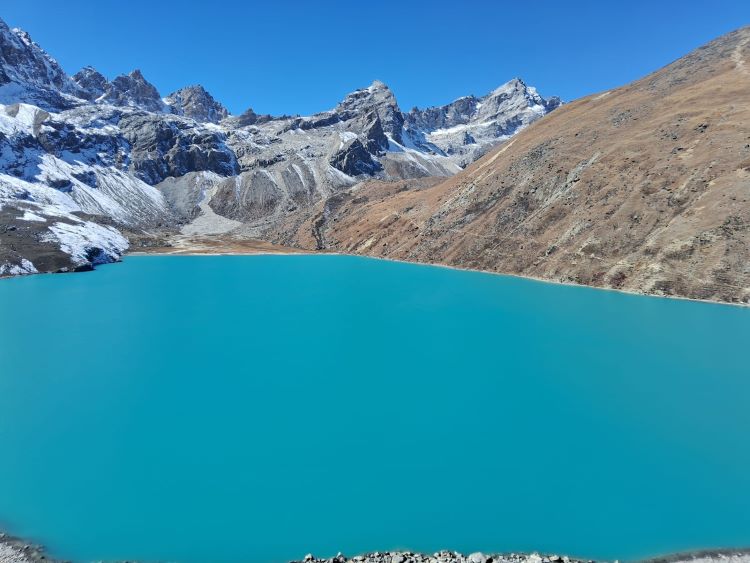
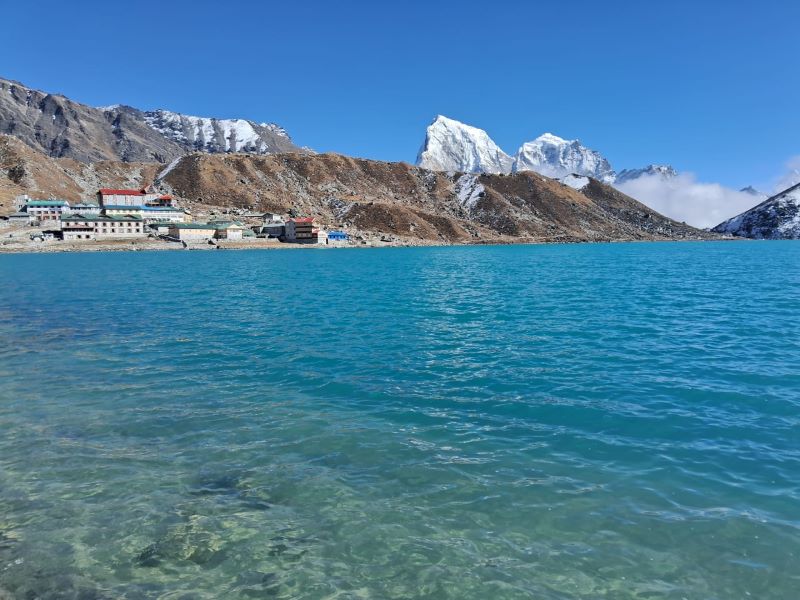
Moreover, the pristine blue & green waters of dazzling Gokyo Lakes at 5,000 meters are the most memorable sights. That is why it is getting very popular these days.
Gokyo Lake Trek is the best choice for travelers who want to dig through diverse landscapes and vegetation. No wonder, the journey at such a peculiar height will be the most challenging and thrilling adventure.
You will have an immense view of awe-inspiring Khumbu vistas that will spellbind you. Even though you walk narrow trails, the alluring scenery of wonderful sights keeps on enchanting you. Believe it! These Gokyo Lake Trekking will be the most marvelous journey ever.
Highlights of Gokyo Lake Trek
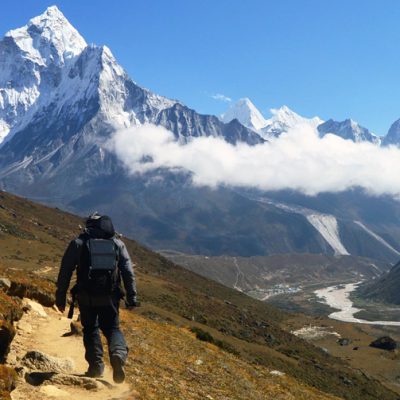
- Exceptional chance to witness gigantic Himalayan Ranges over 8000m including Mt. Everest, Cho Oyu, Lhotse, Makalu and peaks like Ama Dablam, Thamserku, Kantega
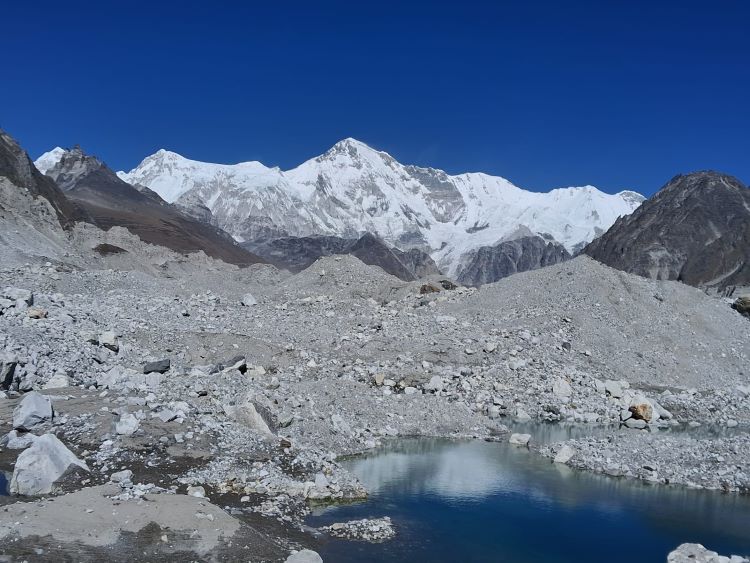
- Enthrall the exceptional beauty of pristine Gokyo Lakes (world’s highest freshwater lake system) including Longpongo (4690m) and Taboche Tsho
- Walk on the sloppy moraines of The Ngozumpa Glacier, the largest glacier in Nepal
- Delve into Scoundrel’s viewpoint near Fifth lake and spectacular views Renjo La Pass (5,340m), one of Nepal’s most beautiful passes
- Mesmerizing sunrise and sunset view from vantage point Gokyo Ri at 5,357m/ 1632ft
- Soak into the lifestyle and culture of Sherpas in villages like Macchermo, Dole, Namche, Khumjung, and Manjo
- View the wonderful ice ridge between Gyachung (2922m) and Cho Oyu of Khumbu Region
- Visit Sagarmatha National Park to witness the protected floras and faunas
- Walk through peaceful & off-beaten trails of the Everest Region and enjoy the unspoiled crisp
- The best alternative to the traditional Everest Base Camp Trek
- Lifetime experience of a delightful trek within the serenity of the dazzling lakes with alluring sights
The Best Time to Trek Gokyo Lake
Gokyo Lake Trekking offers to travel numerous wonderful destinations and enjoy remarkable scenery. To experience the best climatic situations, you must trek during the appropriate season. Among all, the best season is Autumn (Sept to Nov) and Spring (March to May)
In these seasons, the weather is clear and sunny with warm daytime temperatures. The sky is calm and blue with nature blooming in colorful radiance. The panoramic views of mountain ranges are unobstructed and look outstanding.
But it is not impossible to trek in other seasons. If you wish to avoid crowds and prefer to enjoy some alone time with nature, you can opt for it. But this requires better preparations even for difficult conditions. The temperature could be harsh and there might be no clear views. While trekking in summer or monsoon will be heavily affected by rain.
On the trek, you will be accommodating at the lodge or any tea house. You will be served basic foods and services. In peak seasons, you might have to pre-book. You should be really careful about everything as Gokyo Lake Trek is at such a higher elevation.
Besides the altitude sickness, many trekkers might catch “Khumbu Cough” as the region is cold and dry all season. Thus, you should take proper precautions for those difficulties during this Trekking. Stay hydrated all the time and don’t over stress your body.
Gokyo Lakes Trek Difficulties
The Gokyo Lakes Trek is considered moderate in its difficulty level.The trek does not involve any technical routes. But, the trails are physically demanding. On average you will have to walk for around 5 to 6 hours during each trekking day.
On average, you will have to walk for around 5 to 6 hours during each trekking day. Some of the trail segments involve steep ascents, long descends and loose rocks. So, you need to have considerable physical fitness to endure consecutive trekking days over the tough mountainous trails.
The Gokyo Lakes Trek reaches several high altitude points, which will lead to the possibility of altitude sickness. Additionally, the remoteness of the region and unpredictable mountain weather add to the difficulty level of the Gokyo Peak trekking adventure.
Gokyo Lake Trek Cost
The Gokyo Lake Trek cost varies depending on several factors, such as the trek duration, season of level of comfort, How ever, Our 14 days Gokyo lake trek cost USD 1350 Per Person , this price inclusive service from Kathmandu to Kathmandu.
The price Quoted base on minimum 2 people group but if you have group above 10 people we have heavy discount and free for group leader as well.
Trekking Cost and Group Discount
1 People – USD 1550
2 People group, Pay together – USD 1350 Per Person
3 People Group Pay together – USD 1350 Per person
4-8 People group Pay together – USD 1290 Per Person
9- 12 People Group , Pay Togehter- USD 1250 Per Person
Altitude Sickness and Acclimatization
The Gokyo Lake Trek is a high-altitude mountain adventure that takes you deep into the Everest region to altitudes that even experienced trekkers find challenging. The stunning turquoise lakes of Gokyo are at approximately 4,760 meters. Moreover, the climb to Gokyo Ri, the trek’s most spectacular viewpoint, rises to a staggering 5,357 meters. The air is much thinner at these heights and oxygen saturation is nearly half that of sea level. As the air pressure is significantly reduced, every step becomes more effortful and can result in altitude sickness.
That’s why it’s so critical to take it slow, rest often and have a well-planned itinerary that gives your body time to adjust. Good acclimatization days, especially in Namche Bazaar (3,446 m) or at Machhermo (4,410 m), are essential to allow your circulatory and respiratory systems to acclimatize to the altitude. Following the “climb high, sleep low” principle also helps acclimate well. Medication like Diamox (acetazolamide) can avert AMS but isn’t a substitute for proper acclimatization. Listen to your body, rest when necessary and descend straight away if the symptoms worsen. These are the basics of a safe and enjoyable trek.
Accommodation and Meals
At the time of the trek to Gokyo Lakes, the accommodation options are usually locally run teahouses. They are simple but are cozy and comfortable places to sleep and enjoy a meal after a day’s trekking. Shared bathroom and toilet facilities and a communal dining room are the norm. The rooms come with twin beds and basic bed linen like a mattress, blanket and pillows.
As you ascend further up on altitude, the teahouse facilities become increasingly basic with fewer luxuries such as hot showers or electricity. But the stunning mountain scenery, open dining areas with wood fires and the hospitality of Sherpa hosts more than compensate for modesty. In high season trekking months, rooms are likely to be booked out early, so it’s best to a rive quickly or book ahead as much as possible.
Meals at teahouses are surprisingly extensive, with menus generally featuring Nepali, Tibetan and simple Western cuisine. The regular fare is dal bhat (rice, lentil soup and vegetable curry), which is wholesome and highly satisfying. Fried rice, noodles, pancakes, momos and soups are other varieties. The food is freshly prepared, considering the altitude and remoteness and is nourishing enough to give you the energy you need to tackle each day’s trek.
The higher up, the less selection is available in food and it is more expensive, since it is difficult to haul supplies up to remote villages.
Why Book This Trek With Adventure Great Himalaya?
Adventure Great Himalaya is a trustworthy, Nepal-based trekking company with a long-standing reputation for planning safe, memorable adventures across the Himalayas. Having the Gokyo Lakes Trek booked through us puts you in the care of experienced, government-licensed guides who know the terrain, weather conditions and altitudes of the Everest region.
They have extensive local knowledge, so you can experience a more interactive, insightful and meaningful trip. Once you are in Nepal, all things are managed by our staff ranging from permits, accommodations, transport and other logistics so that you can have the best out of the trip.
We provide customized itineraries that can be tailored to your specified level of fitness, interest and pace. We also offer clear and honest pricing without any extra costs. With us you will be able to have the trek without any compromise on comfort and safety.
Gokyo Lake Trek Itinerary
Arrive In Kathmandu (1400 m)
Welcome to the country of Mt. Everest! As you arrive in Tribhuvan International Airport, our representatives will receive you and transfer to the hotel which you have booked in Kathmandu. Hotel staffs will complete check in and manage for your accommodation. team.
Accommodation: 3 Star Hotel
Meals : No
Kathmandu to Lukla flight and Trek to Phakding (2610m.)
On this day, you will be transferred to the airport for a short scenic flight to Lukla. It is less than 30 minutes flight with astonishing views of mountains, forests and river valleys. After landing in Lukla, we begin our trekking to Phakding. The trail leads to Phakding enjoying the natural scenario along the way. We stay overnight in Phakding in a lodge.
Meals : Breakfast, Lunch, Dinner
Accommodation : Lodge / Tea House
Phakding –Namche Trekking- 6 hrs. (3446m.)
On this day, we trek to Namche Bazaar from Phakding Village through Dudh Koshi riverside. The trail is pleasant with the views of forests of pine, fir and Rhododendron trees. We reach Monjo which is the entrance of Sagarmatha National Park. The views of giant mountains are impressive while walking through the trail. We stay overnight in a hotel after exploring the surrounding area of Namche Bazaar.
Meals : Breakfast, Lunch, Dinner
Accommodation : Lodge / Tea House
Acclimatization Day
It is acclimatization day in Namche so you have enough time to explore the life style of locals. Short hiking can be utilization of the time. High altitude can be harmful if we ignore resting. It is necessary to adjust your body with high elevation. Visit Sagarmatha National Park and hiking to Everest View Hotel. You can view the world’s amazing panoramic scenes of the earth and get chance to observe uniquely different Sherpa Culture.
Meals : Breakfast, Lunch, Dinner
Accommodation : Lodge / Tea House
Trek to Dole 4,200m – 06 hrs.
After a wonderful time here at Namche the walk starts with a short uphill on the main trail to Everest base camp for a while, then on the gradual winding track to Kyangima near Shanasa a small settlements with few houses, here might see some wildlife as this area if full of colourful Danphe pheasant (Impeyan Pheasant) National bird of Nepal and elusive musk deer, Himalayan Thar (mountain goat).
After a good walk trek diverts leaving the main trail behind then continue trek towards Gokyo with steep climb to Mong ridge top at 3,973 meters, from here walking downhill path to Phortse Thanghka near Dudh Kosi River.
From here walk heads to Dole for the overnight stop, after a climb into small woods of rhododendron trees as it changes to juniper and conifers bushes tree lines then to Tongba 3,950m and Gyele 3,960 m small settlements before Dole, here at Dole with fascinating views of Khumbila and Tawache peaks.
Meals : Breakfast, Lunch, Dinner
Accommodation : Lodge / Tea House
Trek to Machermo 4,410m-04 hrs.
From Dole adventure leads along the valley side on a gradual level path for an hour to a settlement of Lhabarma Kharka at 4,325 m and to Luza at 4,390m; walking around the ridge top with the views of Machermo village on glacial valley, then descending to Machermo for overnight stop with a half day with afternoon frees after lunch for acclimatization and short hikes.
Meals : Breakfast, Lunch, Dinner
Accommodation : Lodge / Tea House
Trek to Gokyo 4,760m -04 hrs.
As the walk progress on this high altitude moving to the final destination of this adventurous trip to Gokyo Lake morning walks on the scenic path to a small place of Pangka 4,545m, then the route climbs a rocky trail into ablation valley through the first lake and then a second lake, and then finally to the third lake also called Dudh Pokhari.
On the shore of the lake stands Gokyo at 4,790 meters the summer settlement of Khumbu area, here free afternoon after lunch for short walk with acclimatization, from this vantage point near the lake offers striking views of
Mt. Cho Oyo world’s 06th highest and Gyachung Kang reflecting on turquoise green Gokyo Lake.
Meals : Breakfast, Lunch, Dinner
Accommodation : Lodge / Tea House
Climb to Gokyo Ri enjoy Himalaya Sinrise and Hike to Fifth Lake
Early morning we climb to Gokyo Ri. Gokyo Ri (5360m), a small peak above Gokyo village. As we climb the views become even more fantastic and from the top we can see four of the seven highest peaks in the Nepal Himalaya: Cho Oyu, Everest, Lhotse and Makalu. Stretching out for miles below us is the longest glacier in Nepal – the
Ngozumpo glacier, which tumbles down from the slopes of Cho Oyu. One of the best all round views in Nepal. After Himalaya Sunrise view, we will return to Macchermo same way. overnight lodge in Macchermo.
Meals : Breakfast, Lunch, Dinner
Accommodation : Lodge / Tea House
Gokyo Lake to Back Dole, 4200m, 5 hour
Today We trek back same way, and On the way we will enjoy the views of the Cholatse and Taboche peaks. Our trail descends before climbing a hill. After reaching the chorten at the edge, we see great views of Thamserku, Cho Oyu, and Kangtega mountains. We walk past Machhermo, Luza and Lhafarma villages before reaching Dole. Overnight in Dole.
Meals : Breakfast, Lunch, Dinner
Accommodation : Lodge / Tea House
Dole to Namche Bazzar, 3480m, 6 hour
We Trek Back to Namche Same way, the trail beginning steep downhill to Phortse Thanga admiring rhododendrons, wildflowers and waterfalls. We also encounter mountain goats, musk deer, pheasants, etc. along the trail we will have good mountain views of Khumbila peak. On our way to Namche the view of Taboche, Ama Dablam, Thamserku and Kangtega mountains are ours to admire. Overnight in Namche Bazaar.
Meals : Breakfast, Lunch, Dinner
Accommodation : Lodge / Tea House
Namche – Lukla.( 2800m) 7 hour,
We descend on a rocky trail and cross several suspension bridges before walking on a leveled trail. The air is warmer as we walk on the same trail to reach Lukla. Our trek in the mountain ends after we reach Lukla. We spend our time reminiscing about our time spent in the mountain. Overnight in Lukla.
Meals : Breakfast, Lunch, Dinner
Accommodation : Lodge / Tea House
Lukla to Kathmandu
On this day, you fly to Kathmandu in the morning. This short and scenic flight possibly makes you feel nostalgic because of the glimpses of snowy mountains through private window of plane. You will be transferred to hotel where you either have leisure time or you may catch the last moments exploring the sights of Kathmandu. Shopping in market is another best option. In the evening, we have a celebration dinner together.
Meals : Breakfast,
Accommodation : 3 Star Hotel
Free day
Today is our free day.we always suggest you take one extra days after the trek incase the flight delay of cancel from Lujla to kahtmandu. if your trip goes smothly, may be you do city sightseeing.
Meals : Breakfast, Dinner
Accommodation : 3 Star Hotel
Departure from Nepal.
We will drop you at the airport as per your time. and good bye from Nepal.
Meals : Breakfast
Cost Include/Exclude
What’s include
- Airport / Hotel / Airport Transport by private car/van/Bus.
- Hotel In Kathmandu: Three night’s Standard Hotel in Kathmandu. Including Breakfast
- Meals: Daily 3 meals a day during the trekking (Breakfast, Lunch and Dinner)
- All the Trekking permit and necessary Company paper works.
- Domestic flight Ticket : Round Trip Flight ticket from Kathmandu to Lukla and Kathmandu.
- All accommodations in lodges/tea houses during the treks.
- Trekking Guide – A Professional, Helpfull English Speaking Guide
- Trekking Porter: carry your luggage ( one porter for 2 members) No porter for Solo Trekkers
- Guide, Porter Insurance, well paid salary, Meals, accommodation
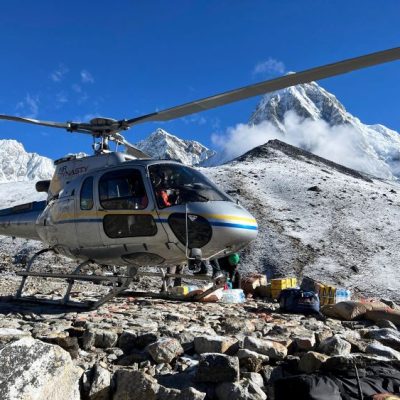
- Arrangement of Emergency Helicopter service which will be paid by your Travel insurance company.
- Company T-shirt and Trekking map.
- Medical supplies (first aid kit will be available).
- All government taxes.
- Service charge.
What’s excluded
- International airfare and Nepal entry visa fee
- Personal Travel insurance and also rescue evacuation in case of emergency
- Lunch Dinner in Kathmandu.
- All hot and bottle of drinks, Hot shower, WIFI etc
- Tips for the guide, porter
Packing List
Clothing
- Inner Base Layers
- Insulation Layer
- Outer Layer
List of clothing:
• Fleece jacket
• Convertible Hiking trousers
• Underwear briefs
• Sports bras (for female travelers)
• Light thermal vests
• Waterproof pants
• Waterproof jackets
• Short/long-sleeved shirts
• Lightweight thermals
• Fleece or wool trousers
Foot Wears
- Merino wool socks
- Gaiters:
- Flip flops/Slippers
- Hiking Boots
- Thermal Socks.
- Head Wears
- Sun hat
- Woolen hat or Beanies
- Sunglasses:
- Bandana/scarfs
- Headlamp.
List of Head wears:
• Wool or fleece hat
• UV protected Sunglasses
• Sun protection hats
• Bandana or headscarf
• Prescription sunglasses
• Headlamp with extra batteries and bulbs
Hand Wears
Gloves
Sleeping Gears
- Sleeping Bags
- Liner
- Ear Plugs
- Bags
- Duffel Bag:
- Backpack
- Daypack
- Raincover
Trekking Gears and Equipment
- Trekking Poles
- Ultra Violet (UV)
- Water Bottle/Hydration Bladder
- Lock and safety whistle
Toiletries
- Towel
- Sunscreen
- Wet Wipes
- Hand Sanitizer
- Toilet paper
- Sanitary napkins/tampons:
- Medications
- Water purification tablets:
First Aid Kit
- Diamox Tablets
- Recommended prescription medications
- Blister plasters
- Oximeter
- Spare eyeglasses/contact lenses
Important Documents
- Visa
- Immunization
- Passport
- Money
- Insurance
- Trek Permits:
- Miscellaneous Items
- Camera
- Portable Chargers and Power Banks
- Books/Kindle:
- Cards/Board games
- Journal and pen
More details about Packing List
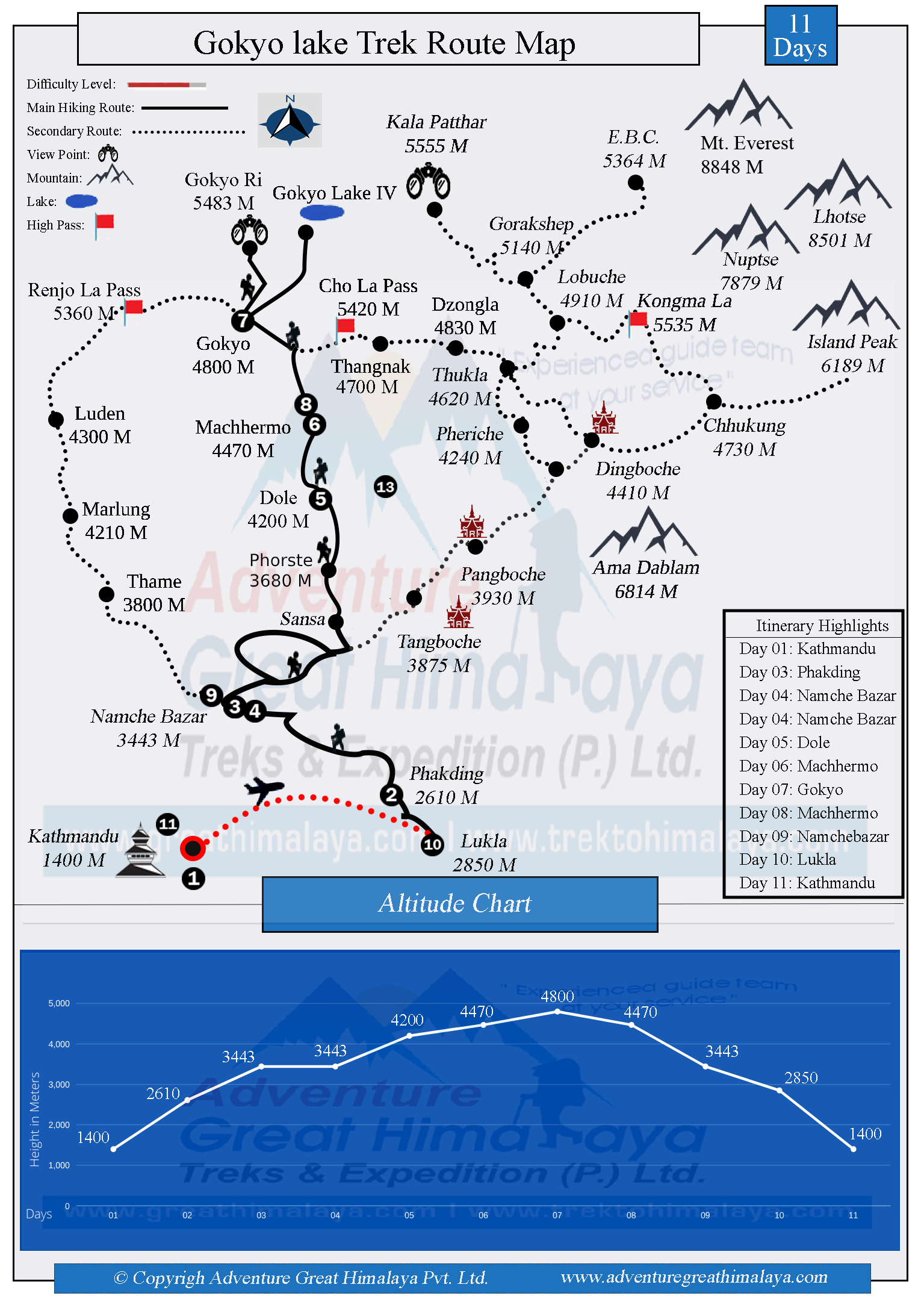
Trip Map
Frequently Asked Questions
General FAQs
What is the Gokyo Lake Trekking?
It is a high-altitude remote trekking route of the Khumbu region in Nepal. This journey is most sought after for the highest lake cluster in the world, which consists of the six sacred pokhari (lakes) and the breathtaking Himalayan panorama.
The Trek goes through traditional Sherpa Villages, terraced farmlands, suspension bridges, isolated settlements, glacial paths, moraines, and alpine meadows. Similarly, trekkers seeking a more peaceful and personal journey in the Khumbu region take this trail as an alternative route for the classic journeys, like the Everest Base Camp Trek.
What is the main attraction of the Gokyo Valley trek?
The primary highlight of the journey is exploring the turquoise Gokyo Lakes, the highest lake cluster in the world. It includes Longponga Tsho, Taujung Tsho, Gokyo Tsho (Dudh Pokhari), Thonak Tsho, Ngozumpa Tsho, and Gyazumpa Tsho. Likewise, another key attraction of the journey is climbing to the top of Gokyo Ri and beholding the golden sunrise that reflects on the surrounding mountains. Trekkers can also witness the Ngozumpa glacier. It is the largest glacier in Nepal and stretches about 36 kilometers.
Is This Trek for Beginners?
While not a technical trail, the steepness and elevation of the Gokyo Lake trekking journey make it most suitable for individuals who have a sound physical fitness level. Beginners can try it with proper training, taking a slow pace and with the assistance of experienced guides. Although prior trekking experience is preferred, it is not absolutely required.
How Long is the Gokyo Lake Trek?
The Gokyo Lake trek lasts for around 12 to 14 days, depending on your starting point, pace, acclimatization need, fitness and experience etc. The trek can also be adjusted to shorter or longer version according to your preference and physical condition. Simply share your holiday plans and we are here to customize the trek to align your requirements.
Is the Gokyo Lakes Trek Worth ?
Yes. It offers both scenic and cultural rewards. As it is a remote destination travellers get a more serene experience. In addition, trekking through the remote trails provides more sense of adventure than the classic journeys. The crisp mountain air, stunning sunrise views from Gokyo Ri, and encounters with local Sherpa communities make every step memorable. Along the way, Mount Nupste, Lhotse, Makalu, Ama Dablam, Cho Oyu, and Everest make up a breathtaking visual. For those seeking a blend of challenge, beauty, and solitude, the Gokyo Lakes Trek is truly unparalleled.
How do I start Gokyo Valley trekking?
First, trekkers should have a valid passport and then obtain a Nepal tourist visa (you can get it in advance or apply for a visa on arrival). Then decide the itinerary and arrange the necessary logistics, transportation, permits, food, and accommodation.
Once that is done, take a flight to Nepal and then fly to Lukla; after that, you can begin trekking on foot, following the Gokyo Lake route. Alternatively, trek through a registered tour operator, like Adventure Great Himalaya, and let them take care of all the hassle while you can just enjoy the experience.
How Difficult Is The Gokyo Lake Trek?
The Gokyo Lake Trek is considered to be moderately difficult. It is because of the combination of high altitude, remote trails, and long duration. Trekkers spend about a week above the altitude of 3,500 meters, so they should be aware of the potential risks of Acute Mountain Sickness (AMS). Similarly, on average travellers walk for about 5 to 8 hours, which requires good physical stamina.
The mountain weather can change swiftly, regardless of the season. In conclusion, trekkers must be prepared for steep ascents, uneven terrain, changing weather, and high altitude.
What is The Best Season To Visit Gokyo Lake?
The best time for the Gokyo Lakes Trek is the spring (March to May) and autumn (September to November). However, with proper preparation and the assistance of a local guide, it is doable throughout the year. Spring and autumn offer stable weather, warm temperatures, and unobstructed panoramic views.
On the other hand, winter and monsoon seasons offer less traffic and equally rewarding sweeping views of the mountains on clear days. However, trekkers do have to wear proper rainy or winter gear accordingly and be aware of the weather changes. Lastly, keep a few buffer days to fit possible weather-related delays.
Is Gokyo Ri Harder Than Kala Patthar?
Gokyo Ri and Kala Patthar are the most well known high altitude vantage points in the Everest region with their own challenges. Although Kala Patthar stands a little higher at 5,545 meters than Gokyo Ri at 5,357 meters, the height difference does not make it necessarily harder.
The climb up to Kala Patthar is shorter but steeper through rocky trails. The hike is usually done early morning to see the sunrise over Everest and its adjoining mountains.
On the other hand, the ascent to Gokyo Ri starts from Gokyo village and is slightly longer, typically 2–3 hours. The path is less steep, allows for a consistent pace and is not that strenuous.
Is Gokyo Lake Crowded Like the Everest Base Camp Trail?
Unlike the Everest Base Camp trail, the Gokyo Lakes Trek is very peaceful, especially beyond Namche Bazaar, as most trekkers on the EBC trail head east to Tengboche and Base Camp.
The Gokyo trail heads northwest and becomes relatively quieter quickly with fewer tourists, less crowded tea houses and a generally less noisy atmosphere. Even the popular viewpoint of Gokyo Ri hardly have anywhere close to the crowds at Kala Patthar.
Is It the Same Trek To Gokyo Valley and Gokyo Lake?
Yes, the treks to the Gokyo Valley and the Gokyo Lakes follow the same route. Even though the names differ, they refer to the same high-altitude journey, combining scenic lakes, glaciers, and Himalayan views.
The Gokyo Valley focuses on the region or area, while the Gokyo Lakes highlight the main lakes within that valley. However, both terms describe the same trekking experience, and choosing either name refers to walking the same classic trails to head to the Gokyo village and explore the surrounding lakes.
What is The Highest Altitude We Reach during gokyo valley Trek?
The maximum elevation trekkers reach while on the Gokyo Lakes Trekking is 5,357 meters (Gokyo Ri). From this viewpoint trekkers can see panoramic views of mountains such as Everest, Cho Oyu, Lhotse, etc.
This high elevation poses possible risks of Acute Mountain Sickness (AMS). Trekkers should include enough rest days while trekking, maintain a slow pace, and gain elevation gradually. This improves the acclimatization and helps the body make necessary physiological adjustments.
Can we swim In The Gokyo Lake?
No. You cannot. These lakes are sacred to the local Sherpa community, so attempting to swim in them is a religious and spiritual offense. Trekkers should just admire the beauty of the Gokyo Lakes and not try to swim or bathe.
The lake is located inside the Sagarmatha National Park, which is a UNESCO World Heritage Site. So, it is also legally prohibited to swim in them. If travellers are found trying to mess with any natural resources, including the lake, they may have to face legal consequences.
How To Prepare For The Gokyo Lakes Trek?
Start by walking or jogging at least three times a week to help build your stamina. Similarly, go on short hikes that mimic the ascent and descent of the actual trek at least 3 months before. Practice exercises that improve stamina and endurance, like stair climbing, cycling, swimming, squats, lunges, sit-ups, planks, etc. Likewise, for better oxygen absorption while in higher elevations and cold temperatures, incorporate breathing techniques in your training. Lastly, mental preparation is also crucial; trekkers should be willing to live with basic facilities and trek through varying, rocky, and rugged trails every day.
What Is The Total Distance of The Gokyo Lakes Trek?
With the standard itinerary (14 days), this journey covers about 95 to 105 kilometers.
- Lukla to Namche Bazaar—approximately 18 to 20 km
- Namche to Gokyo (via Dole and Machermo)—approximately 30 to 35 km
- Gokyo to Fifth Lake & Gokyo Ri hike—approximately 8 to 10 km
- Return from Gokyo to Lukla—approximately 40 to 45 km
The exact distance may vary slightly depending on trail conditions and side hikes. You can explore the region during the rest days and attempt to visit more viewpoints. Therefore, the total distance you cover during the trek can differ from the standard package.
Can This Trek Be Done With Everest Base Camp?
It is absolutely possible to do the Gokyo Lake Trek with a visit to the iconic Everest Base Camp. The majority of trekkers do a combination of the Gokyo Lakes With Everest Base Camp trek through the challenging Cho La Pass. It costs 3 to 4 extra days and demands good physical fitness and acclimatization but offers bird’s-eye views and a more rounded experience of the Everest region.
What Cultural Significance Do Gokyo Lakes Hold?
The five shimmering turquoise Gokyo Lakes are holy to Buddhists and Hindu devotees and have been a place of spiritual pilgrimage for hundreds of years. They are holy to Lord Vishnu to Hindus, with a belief of being the home of serpent gods (Naag Devata).
To the Sherpas, who are Tibetan Buddhists, the lakes and the mountains around them (such as Cho Oyu) are the dwelling places of divine spirits and guardian deities. The religious importance of the lake is blended with its breathtaking natural beauty, enabling trekkers to experience Himalayan culture along with pristine wilderness.
Accommodation And Toiletries
What Kinds Of Lodges Are Available For Gokyo Trekking?
Primarily, along the trail, trekkers can find family-run teahouses. The rooms here are modest and have twin beds, blankets, and pillows. They usually do not provide individual room heating facilities due to a lack of necessary infrastructure. The dining area has a huge fireplace in the middle that acts as the only heated area.
The bathroom and toilets are communal and are often located outside. Tekkers have to pay for extra services like Wi-Fi, hot showers, and charging their electronic devices. In the major landmarks of the lower and mid regions, there are a few resorts and lodges that offer upgraded amenities as well.
Is It Possible To Have A Private Room?
Yes. Trekkers can get a private room during the Gokyo Lakes journey. However, it depends on the location and availability. In the popular villages, like Namche Bazaar and Phakding, where upgraded resorts and lodges are present, finding a personal room is no issue.
Similarly, as you move higher up, beyond Machemmro, there are usually twin rooms that you have to share with your fellow trekkers. During peak trekking season, as the traffic is high, it is better to book your trip via a registered company so they can pre-book the best rooms for you.
What Amenities Are In The Accommodation?
The teahouses or lodges along the Gokyo Lakes route have simple rooms with twin beds, mattresses, pillows, and warm blankets. Similarly, they have shared bathrooms (either squat or the western sitting toilets). They do not provide toiletries, so it is better to carry your own personal hygiene supplies.
At teahouses that use Wi-Fi and charging facilities, trekkers are liable to pay a small fee. Similarly, hot showers are generally available throughout the process and increase with the elevation. At higher elevations, the shower can be of a bucket style.
Can We Get an Attached Bathroom?
During the Gokyo Lakes Trek, trekkers can get a private bathroom, but only in the lower and mid regions (occasionally). As these regions have premium resorts and lodges, it is easy to get a room with en-suite bathrooms. However, in the higher regions, Machemmro, Dole, and Gokyo.
Most of the teahouses offer shared bathrooms or toilets only. During the peak seasons, finding a room with a private toilet can be difficult, so you should either book them in advance or take a trip through a registered tour operator.
Are Hot Showers Available?
Yes. Most teahouses offer them at extra cost (as you ascend, the price gets higher). Lower regions, up to Namche Bazaar, typically provide running hot showers at a small fee ($1 to $2). Likewise, as you ascend to Dole, Machhemore, and the Gokyo valley, teahouses still offer it. However, they are provided in a bucket and mug style, where the water is heated with gas or wood. The cost is also a bit higher, around $5 to $8 for a bath, due to limited water and transportation difficulty.
Do you need to bring a towel, soap, and shampoo?
Yes. Trekkers should bring their own toiletries because teahouses don’t provide them. So, be careful and pack a small, biodegradable soap or body wash, shampoo, and a towel. In addition, people who are going on a trek should bring their own personal hygiene items, such as toothpaste, toothbrushes, hand sanitizer, wet wipes, and so on.
A quick-dry towel would be beneficial for trekkers. This is because it is lightweight and dries in short time. Female travellers should also bring feminine hygiene products, sanitary pads, panty liners, or tampons. This is because they may not always be available at the higher elevations
Do We Need To Book Accommodation In Advance?
It may not be necessary during the off-season, monsoon, and winter. However, trekkers do benefit from booking the accommodation in advance during the peak trekking season, as the region receives a high number of travellers. Additionally, if you want upgraded amenities, like private rooms with attached bathrooms, it is better to prebook, regardless of the season, as they have high demand throughout the year. Moreover, this also reduces the last-minute stress of having to look for a safe and comfortable stay, allowing you to enjoy the Gokyo Lakes Trek.
What Types Of Toilets May I Expect?
Along the Gokyo Lakes trekking route, they vary with altitude. The lower villages have private/attached bathrooms (both squat and Western-style with basic flushing systems). However, as you trek higher towards Machhemro and Gokyo, they are limited to the squat toilets that require manual bucket flushing. Likewise, they are communal and shared by all the trekkers staying at the teahouse/guesthouse. They are usually located outside, so trekkers should carry a headlamp or a torch with an extra set of batteries for night use.
Is It Necessary To Bring Toilet Paper With Us?
Yes, trekkers need to carry their own toilet paper during the Gokyo Lakes Trek. This is because the teahouses do not offer them. A few stores may sell them along the trail, but they become expensive as you trek higher because of the added transportation charge.
Moreover, in higher regions, the supplies are minimal, so at times you may not even be able to purchase them. Therefore, carry a few rolls of toilet paper along with a hand sanitizer in a water-resistant bag to protect from rain and snow.
Are There Any Laundry Services?
Along the Gokyo Lakes Trek, laundry services are available only in the lower villages. Several teahouses at Namche and Phakding offer them at an additional charge ($1 to $3 for a clothing item or $5 to $10 per load). Alternatively, they also provide warm water to the trekkers to handwash their clothes (small fee applicable). However, in the higher regions, laundry services are minimal to almost absent. Even when available, drying the clothes in time can be an issue due to cold temperatures. Therefore, trekkers should pack light and moisture-wicking clothes.
Package Cost Inclusive & Exclusive
How Much Does The Gokyo Valley Package Cost?
The standard price for the trek is $1,150 per person. This covers all the logistics during the journey, food, accommodations, and ground and domestic air transportation (Lukla flight). Moreover, all the governmental fees to obtain the necessary permits, namely the Sagarmatha National Park Entry Permit (SNP) and the Khumbu Pashang Lhamu Rural Municipality Entrance Permit.
The package also comes with an experienced English-Speaking guide and a porter (shared between two trekkers). Lastly, it also includes necessary arrangements for the emergency helicopter evacuation and basic first-aid supplies.
How Much Extra Money Do We Need?
For personal expenses, about $20 to $40 per person per day is more than enough. It may vary based on your comfort and personal spending habits. Trekkers have to pay $1 to $8 for a hot shower (higher the elevation, the greater the price). Wi-Fi costs about $3 to $5 per hour, and charging your phone or other electronic devices costs about $1 to $5 per hour for a device. Set aside around $2 to $5 for extra snacks and sweet treats along the trail, like chocolates, nuts, apple pie, pastries, etc. Although not mandatory, provide $10 to $15 per day for a guide and $5 to $20 for a porter as a tip.
Can I Use USD or Do I Need Nepali Money?
Trekkers should bring Nepali rupees during the Gokyo Lakes Trek. Some teahouses or stores may accept payment in USD as well, but the exchange rate is much lower than in banks or money exchange centers in Kathmandu.
In addition, they prefer bills that are crisp with no major folds or tears. Therefore, to save from the hassle, get the Nepali equivalent for your USD before the trek starts from the money exchange shops in Thamel. Alternatively, you can also ask your tour operators to do the exchange for you.
Are There Any ATMs On The Way to the Gokyo Trek?
The ATM service is available only up to Lukla (1 to 2) and Namche (3 to 5). However, they may run out of cash during peak trekking season. As you trek beyond this point, there are no ATMs or banks. Teahouses and stores at higher elevations may not even accept online payments at times. Therefore, trekkers should carry enough Nepali Rupees in cash that is enough for the entire journey. They can either exchange them in Kathmandu, Thamel, or Namche Bazaar before ascending to the higher villages like Dole Machhemro and Gokyo.
Difficulties And Physical Demands
What Are The Challenging Aspects Of The Gokyo Trek?
It is a moderately demanding journey to the Everest region. The first challenging aspect of the journey is the high altitude, with several days above 3,500 meters, and the maximum elevation being 5,357 meters at Gokyo Ri.
Similarly, the long trekking hours (5 to 8 hours every day) through the uneven and rocky trails add to the difficulty of the trek. Likewise, the trekking route goes through remote sections with minimal settlements and infrastructure. Along the way significant ascents and descents increase the physical strain.
Do We Need Previous Trekking Experience For This Journey?
No. It is not mandatory to have prior experience for the Gokyo Lakes Trek. Having completed short hikes or treks before is beneficial. Even beginners have completed the journey with proper physical and mental preparation and the assistance of an experienced guide who is local to the region and is familiar with all the main and alternative routes.
Additionally, keep a gradual pace and acclimatize before and after significant elevation gain. This helps with physiological adjustments and makes the experience safe and enjoyable.
Can I Get Acute Mountain Sickness?
Trekkers do have to be aware of the possible risks of Acute Mountain Sickness (AMS). They spend more than a week above 3,000 meters and reach up to 5,357 meters at Gokyo Ri. Therefore, you can experience moderate to severe symptoms of AMS. As soon as you feel the slight uneasiness due to high elevation, descend and rest until you feel stable to resume trekking. Likewise, if the symptoms worsen or you experience the more severe form of AMS, like HAPE and HACE, seek medical help and call for emergency helicopter evacuation.
How many hours do we walk?
During the Gokyo Lakes Trekking you will walk for about 5 to 8 hours on average. However, it may differ slightly based on the distance to be covered on the day and your pace. Sometimes, the conditions of the trials may also add a few hours.
The Trekkers can request their trekking agency to modify the itinerary according to their pace, fitness, and stamina as well, in case they do not feel comfortable with the pre-set standard walking hours per day.
Are There Medical Facilities Along the Route?
Basic medicines and chemists are available at Namche Bazaar and a couple of other large villages. Medical facilities are very poor in the distant high regions. You may need to carry your own first-aid box and over-the-counter medications to deal with common and minor trek injuries and sicknesses.
Also required is travel insurance with a cover of high altitude trek up to 6,000 meters and emergency evacuation through a helicopter.
Meals & Drinks
What Foods Are Available During the Gokyo Trek?
Primarily, teahouses offer typical Nepali and Sherpa dishes. However, several teahouses especially in the lower villages, offer a few Western dishes as well.
Nepali dishes: Dal Bhat Tarkari (lentils, rice, veggies, and pickle), mo: mo, chowmein, etc
Sherpa dishes: Thukpa (noodle soup), Sherpa stew, garlic soup, shyakpa, tsapma, thentuk, triuldok, etc.
Western options: Pasta, burgers, pizza, toast, pancakes, etc., and expect a hint of Nepali flavor in them since they are prepared with local ingredients and recipes.
Snacks & drinks: Chocolates, energy bars, biscuits, tea, coffee, and hot chocolate.
Can We Choose The Meals From The Menu?
Yes, you can pick any available food. Even though the typical lunch and dinner at most of the teahouses is the staple Dal Bhat Tarkari, you may also request the other items on the menu. You can choose the Nepali dumplings called mo:mo, which have minced meat and veggie filling. Likewise, you may opt for a noodle dish or any Western options.
The Important do keep in mind that they are usually prepared after you request them. The cost is higher than in Kathmandu or other lower regions because the ingredients must be carried up, and the food is prepared with fuel or fire.
Are Hot Drinks Available?
Trekkers can enjoy several kinds of hot beverages along the Gokyo Lakes trail. They usually cost about $1 to $3 for a cup.
Some of the most common options include the following.
- Ginger tea
- Black tea
- Masala tea
- Mint tea
- Lemon tea
- Ginger and honey tea
- Local herbal tea
- Sherpa tea, called butter tea, locally known as po cha
- Hot chocolate
- Yak milk (occasionally)
- Black coffee
- Milk coffeeSimilarly, trekkers can also try various Sherpa drinks, like garlic soup or gudruk (a sour and soupy dish made with fermented leafy greens).
Where Do We Get Drinking Water During The Trek?
During the Gokyo Lakes journey, drinking water is available at the teahouses. It is better to filter, purify, or boil it before consumption, as a change in water may get you sick. Therefore, trekkers should carry their own water bottle and purifying tablets or pills. Avoid refilling from random taps, streams, or rivers on the way, as they may be contaminated and get you ill. We advise you to fill your bottles at the teahouses before starting the trek for the day.
Is There Boiled Water Available? How Much Does It Cost?
Yes, trekkers can get boiled water at the teahouse and guesthouses. However, they usually have to pay a small additional charge for it. It costs about $1 to $2 per liter (it can cost more at the higher elevations).
It is recommended to consume boiled water, even though it requires an extra fee. This is because it kills the germs and reduces the risk of suffering from waterborne disease. Teahouses also provide larger containers of boiled water at a slightly higher price for you to take along on the route.
Can I Drink Tap Water on the Trek?
It is strongly advised not to drink untreated tap water on the trek in order to avoid waterborne diseases such as diarrhea or dysentery. Boiled or filtered water is available in most teahouses,
Flight And Transportation
Can We Fly To Lukla Directly From Kathmandu?
Yes, you can get a domestic flight from Kathmandu to Lukla. It is about 30 to 40 minutes long and flies above the terraced farmlands, cities, traditional villages, and hills. However, they are highly weather-dependent and get cancelled or postponed during heavy rainfall, snowfall, dark clouds, or storms. Generally, a one-way flight from Kathmandu to Lukla costs about $200 to $250 per person. Likewise, for a round trip, it costs about $400 to $480, but it may vary depending on the airline and time of year.
Is It True That Lukla Flights Are Diverted Via Manthali During Peak Season?
Yes, it is indeed true. Some of the flights are getting diverted to Ramechhap airport instead of Kathmandu. This usually happens during airport congestion in Kathmandu with significant numbers of domestic flights heading to Lukla.
Airlines usually notify the passengers about the diversion at least 2 or 3 days before. Likewise, there is no additional cost; the original price of the ticket remains. Your tour operators usually arrange a private vehicle or bus to Manthali, so even if the flight gets diverted, it won’t affect the trek.
How Long Is The Drive To Manthali?
It usually takes about 2 to 4 hours, and we cover about 140 km to 150 km. Time varies depending on the road conditions and the traffic. You can either travel in a public bus or a private vehicle (jeep, HiAce, or van) that your tour operator arranges.
We travel via the Araniko Highway; most of the sections are well-paved, with a few occasional bumps. It is better to start the ride early in the morning, as there are higher chances of traffic in the midday and afternoon.
Does The Lukla Flight Cancel Frequently?
Yes, as it is weather-dependent, it does get suspended or delayed frequently. Especially during the monsoon and winter seasons in case of heavy rainfall, snowfall, or storms. Even in Spring and autumn, if the weather is harsh and the visibility is low, your Lukla flight is most likely to be delayed or cancelled. However, they are much less compared to winter and monsoon. Trekkers should keep a few buffer days in their itinerary to accommodate such delays.
Is It Possible To Book A Helicopter Flight?
You can book a helicopter ride from Kathmandu to Lukla. They are available all year long and are slightly less affected by the weather conditions, as they have smaller and fixed wings, unlike those of an airplane.
While deciding the itinerary, you may ask your tour operator or agency to book a helicopter ride to Lukla instead of the regular domestic flights. However, it requires you to pay an additional charge of a few hundred dollars per person in a group.
Health And Safety
What Happens If I Fall Sick In The Mountains?
If your condition is moderate, our team provides you with basic first-aid treatment and has you rest until you feel better. In case of Altitude Mountain Sickness (AMS), we descend you to a lower elevation and constantly check your symptoms until they completely disappear and you feel stable enough to resume trekking.
If you have major injuries or experience severe signs of altitude sickness, then our team coordinates emergency helicopter evacuation with your travel insurance. They will rescue you from the mountains and fly you to the nearest city for hospitalization.
Do I Need Acclimatization And At What Altitude?
Yes, all the trekkers have to acclimate before and after significant elevation gain. Especially in the remote and high-altitude destinations like the Gokyo Lakes, it is extremely crucial so as to make the necessary physiological adjustments.
The recommended rest points during the journey are Namche Bazaar (3,446 meters), with a hike to nearby viewpoints before heading up to Dole (4,200 meters). Feel free to ask for extra rest days at any point of the trek if you feel uneasy due to changes in altitude or environment.
What Are The Safety-Related Tips For The Gokyo Lakes Trek?
Some tips to make the journey safer are mentioned below.
- Take enough rest days.
- Avoid rapid altitude gain, keep it slow and gradual.
- Consume fresh and carb-enriched meals.
- Hire a trekking guide and a porter.
- Practice stamina and endurance-building exercises.
- Wear proper gear according to the season.
- Get travel insurance with a policy that covers rescue operations above 5,000 meters and hospitalization.
- Take a basic first-aid kit with you.
- Plan your trek during peak season for comfort and overall better views.
Do We Need To Take Altitude Sickness Medicine?
You may take pills like Diamox (Acetazolamide). This helps to prevent or reduce the symptoms during the Gokyo Valley Trek. However, it is necessary that you consult with your personal doctor first because it may react with your regular medicine (if any) and result in side effects. The following people should be especially cautious before taking Diamox.
Individuals allergic to the Sulfa drugs.
People with kidney or lung diseases.
Pregnant or breastfeeding women.
Asthma patients or anyone with chronic respiratory health issues.
Others
Do I Need a Guide and Porter for the Gokyo Lake Trek?
It is strongly recommended to hire an official guide for safety, navigation and cultural awareness while going for the Gokyo Lake Trek. Guides can recognize signs of altitude sickness easily and also help readily in the event of emergencies. In the same manner, a porter takes away the burden of your heavy backpack from you and enables you to walk lightly, thereby allowing you to enjoy the trip with more comfort.
Can Electronic Devices Be Charged During the Trek?
Charging opportunities for your electrical appliances exist along the way but are few and usually at an extra cost. The majority of teahouses en route have electricity, typically generated from solar panels.
It normally costs $2 to $5 to charge your phone, camera or any other equipment. As the electricity supply is irregular and at times not available at the higher altitudes, it is advisable to bring a portable power bank to charge your devices on lengthy trekking days.
Is There Internet and Electricity on the Trek?
Although electricity and internet are common in teahouses of the Gokyo trekking trails, they might not be consistent with altitude, location and weather conditions. Electricity and WiFi availability in villages in the lower areas are more frequent and reliable than those in the alpine regions. Electricity is mostly solar powered and it costs extra to charge your devices and to connect to the internet.
Do I need Permit to go Gokyo Valley?
In order to trek to Gokyo Lake you must obtain the Sagarmatha National Park Entry Permit and the Khumbu Pasang Lhamu Rural Municipality Entrance Permit. While the national park permit is necessary to access this protected area for trekking purposes, the local area permit lets you enter and trek through the restricted zones of the Khumbu region.
Reviews of Gokyo Lake Trek
Minela Hajzlerova
We have been going Gokyo trek with extension to 4th and 5th Gokyo lakes + climbing to Gokyo Ri. we had a guide, Samir Rai and one porter given by Great Himalaya agency. The guide was very friendly, professional, give us many info about Nepal nature, culture, interesting places and so on. The most important thing for him was our safety.
Source by – Tripadviser

Enquiry Form
Note: Please ensure names must be exactly the same as your passport (for ticketing/security purposes). You could incur extra costs or even miss your flight if the names are not correct.
You May Like This
Start From
$1250 USD per person
Group Discount Price
Number of Travellers
Customer's Reviews
Why booking with us ?
- Fully Locally Owned Company
- Quality Of Service and Competitive price
- Highly Professional Staff
- Flexible and customization trip itinerary
- 100% Customer satisfaction
Need help?
Nepal: 00977-9841273869 whatsapp: 00977-984127386924 hour customer service