

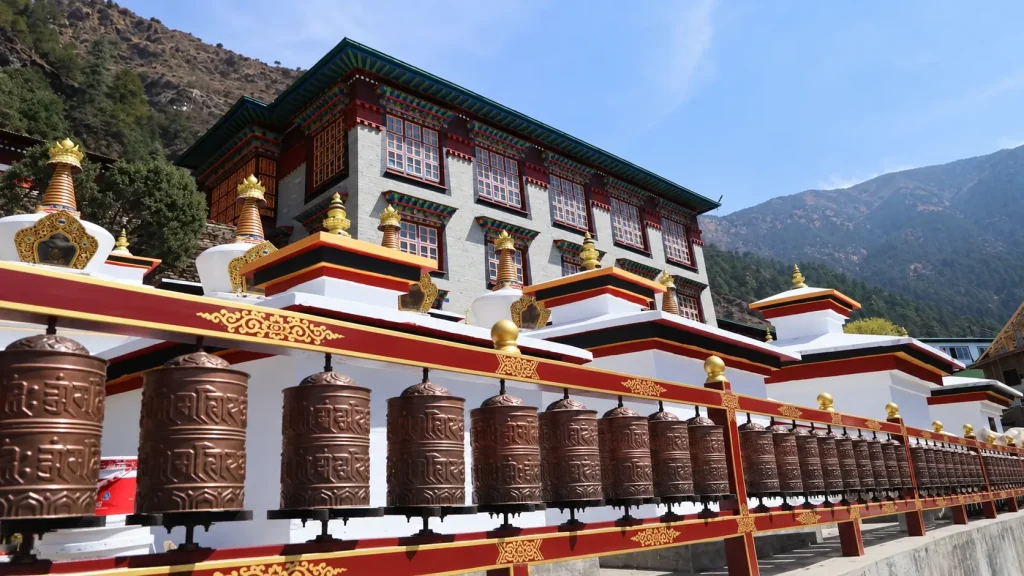
This monastery can also be referred to as Thupten Chholing Monastery or Thubten Choling Monastery. It was founded in 1968 by Trulshig Rinpoche, the outstanding teacher of Tibetan Buddhism who immigrated to Nepal in 1959. After the establishment of the monastery, it has emerged as a significant religious institution with respect to education, meditation and prayer. The monastery has been well-known because of its large number of monks and nuns who sustain Buddhism.
Apart from being an important religious place, Thupten Choling Monastery of Junbesi is an awesome destination for tourists who are keen on learning about history, culture and nature. Tourists can see the traditional Buddhist architecture, prayer flags, religious art and peaceful ambiance. This way, tourists will get a chance to experience the spirituality of Solukhumbu region through nearby Sherpa villages.
Whether you plan a cultural trip or are planning a trek to Thupten Choling Monastery of Nepal, here you will find all the information that you should know about this amazing destination.
Where Is Thupten Choling Monastery Located?
Thupten Choling Monastery is situated close to the Junbesi Village in the Solukhumbu District of Koshi Province of Nepal. This monastery is situated in the lower Solukhumbu, and the elevation of this monastery is 3,000 meters (9,843 feet) above sea level. It is surrounded by green hills, pine forests and stunning mountains of Nepal.
The monastery is located above the Sherpa village of Junbesi, which is famous for its Buddhist culture, stonework and welcoming atmosphere. The location is surrounded by woods, rivers, and trails for trekking. Visitors can enjoy the natural beauty of the Junbesi Valley while studying the religious culture of the locals.
The monastery can be reached from the nearby village of Junbesi. It is located at the top of an uphill hike from this village through wooded, hilly regions and picturesque locales. It takes about 1-2 hours to reach the monastery along this route. It is approximately 3-4 kilometers from Junbesi to Thupten Choling. Along with this, visitors get to view a beautiful valley as well as the other villages around.
In the same way, Thupten Choling Monastery is a cultural site for travelers who undertake treks to the Pikey Peak Trek and trekking routes through lower Solukhumbu.
History of Thupten Choling Monastery
The history of Thupten Choling Monastery started in the late 1950s when Tibetan Buddhist monks and nuns came to Nepal from Tibet and settled there. Among these people was Trulshig Rinpoche, a Buddhist teacher who helped to found this monastery. This temporary place for living turned into a major cultural institution where Tibetan Buddhist traditions were kept alive in the Solukhumbu area.
Founding of Thupten Choling Monastery
The Thupten Choling Monastery was established in 1968 by Kyabje Trulshig Rinpoche on the fringe of Junbesi village in the Solukhumbu district of Nepal. He left Tibet in 1959 and migrated to Khumbu region along with his followers, who were Buddhist monks and nuns. He stayed for several years at monasteries like Thame and Chiwong, thinking that someday he would return to his motherland.
With time, it became harder to go back to Tibet, and Trulshig Rinpoche decided to establish a monastery on the land that was gifted to him in the Junbesi area. Initially, the buildings were quite primitive, as he thought that he and his followers would return to Tibet someday. But later on, it turned into a permanent place for the practice of Buddhism.
Trulshig Rinpoche and His Religious Contributions
Trulshig Rinpoche (1924-2011) was a notable Buddhist master associated with the Nyingma order, which is one of the ancient orders of Tibetan Buddhism. Much of his life, he spent imparting the teachings of Buddhism, including philosophy, meditation and other religious practices. Trulshig Rinpoche also helped to preserve some teachings of Buddhism after fleeing from Tibet.
In Thupten Choling Monastery, Trulshig Rinpoche instructed the monks and nuns in their religious studies. The teachings of Trulshig Rinpoche made the monastery an institute where Tibetan Buddhism could be passed on from one generation to another. The contributions of Trulshig Rinpoche made the Buddhist society of Solukhumbu strong and preserved their connection with the spiritual tradition of Tibet.
The great teacher Trulshig Rinpoche died in September 2011, but the teachings and contributions of Trulshig Rinpoche have not been forgotten in the history of the monastery.
Restoration and Development of the Monastery
The construction of the original buildings at Thupten Choling Monastery was not intended to be long-lasting. By the 1990s, some buildings began to fall apart as a result of wear and tear and the severe weather conditions in the mountains. At the same time, it became clear that in order to continue functioning, stronger and more durable buildings should be built in Thupten Choling.
Construction works were launched in 2001 under the leadership of Trulshig Rinpoche. It is noteworthy that the monastery suffered from the 2015 earthquake in Nepal.
Thupten Choling Monastery is still one of the main centers of Tibetan Buddhism in Nepal. It shows the development of a Buddhist community which sought shelter in the Himalayas, maintaining its traditions and teachings.
Religious and Cultural Significance of Thupten Choling Monastery
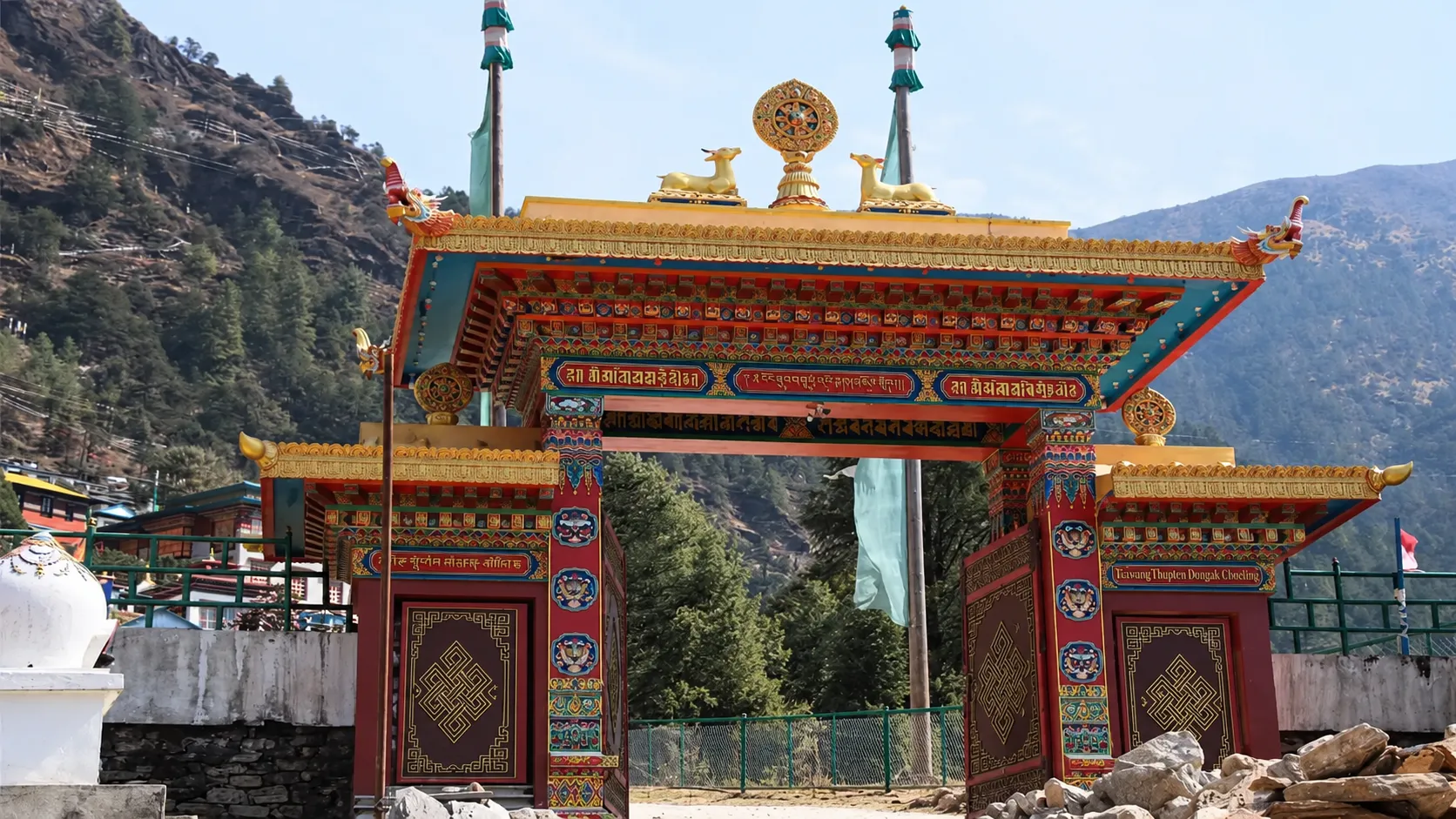
Thupten Choling Monastery is a great center of Tibetan Buddhism that exists in Nepal, famous as a place that keeps alive the spirit of the Buddhist religion. Thupten Choling Monastery follows the Nyingma School tradition, which is considered to be one of the oldest traditions within Tibetan Buddhism. From the very moment when the monastery was established, it became a place where monks and nuns could study the Buddhist religion.
Also, Thupten Choling Monastery has a close link to the Sherpa people living in Solukhumbu, as Buddhism plays an important role in the culture and life of the people there. Through the years, the monastery has been helping to maintain Tibetan religious traditions through prayers, education, and spiritual practices. For both locals and tourists, Thupten Choling is not only a religious structure but also a symbol of faith and culture.
Buddhist Monks and Nuns at Thupten Choling
Among the unique aspects of the Thupten Choling Monastery in Junbesi, there is the presence of a large number of Buddhist monks and nuns. Historically, the monastery has been home to hundreds of religious practitioners, including many Tibetan refugees who moved to Nepal. This place is renowned for having some Buddhist nuns who dedicate their lives to religion.
Prayers, studying, meditation and spiritual exercises are among the actions that these monks and nuns conduct in the monastery. They co-exist as a community of religious practitioners and follow the principles of Buddhism. They lead a simple life which is aimed at promoting kindness, patience, wisdom, and respect for other people. The monastery also offers an ideal environment where young people can be taught Buddhism by experienced monks and nuns.
Buddhist Teachings and Meditation Practices
Thupten Choling Monastery is one of the monasteries where Buddhists get educated and meditate. The religious practices of the monastery are founded on the Nyingma tradition, which stands for wisdom, compassion, meditation, and spiritual evolution.
Prayers and meditations are very important parts of the monastery’s life. The Buddhist believers study the holy books, recite prayers and mantras and participate in religious services. Some people meditate in order to focus and understand the philosophy of Buddhism.
Moreover, many famous Buddhist masters come to the monastery to teach religion to members of the monastery community. For example, in 1977, Dilgo Khyentse Rinpoche, who was a famous master of Tibetan Buddhism, came to the monastery Thupten Choling and stayed there for a few months.
By doing these religious activities, Thupten Choling Monastery preserves the teachings and traditions of Tibetan Buddhism. This place is still a significant place for Buddhist followers and a fascinating destination for tourists who would like to learn about the spiritual and cultural heritage of Nepal’s Himalayan region.
Things to See and Do at Thupten Choling Monastery
Thupten Choling Monastery is more than just a place of worship. It is an amazing tourist destination that gives tourists an opportunity to see the art, architecture, and nature associated with Tibetan Buddhism. You can see worship halls, religious paintings, Buddhist idols, and living quarters for monks and nuns. Located amidst wooded hills and walking trails, the Thupten Choling Monastery is a great place for tourists to get acquainted with Buddhist culture.
Traditional Tibetan Buddhist Architecture
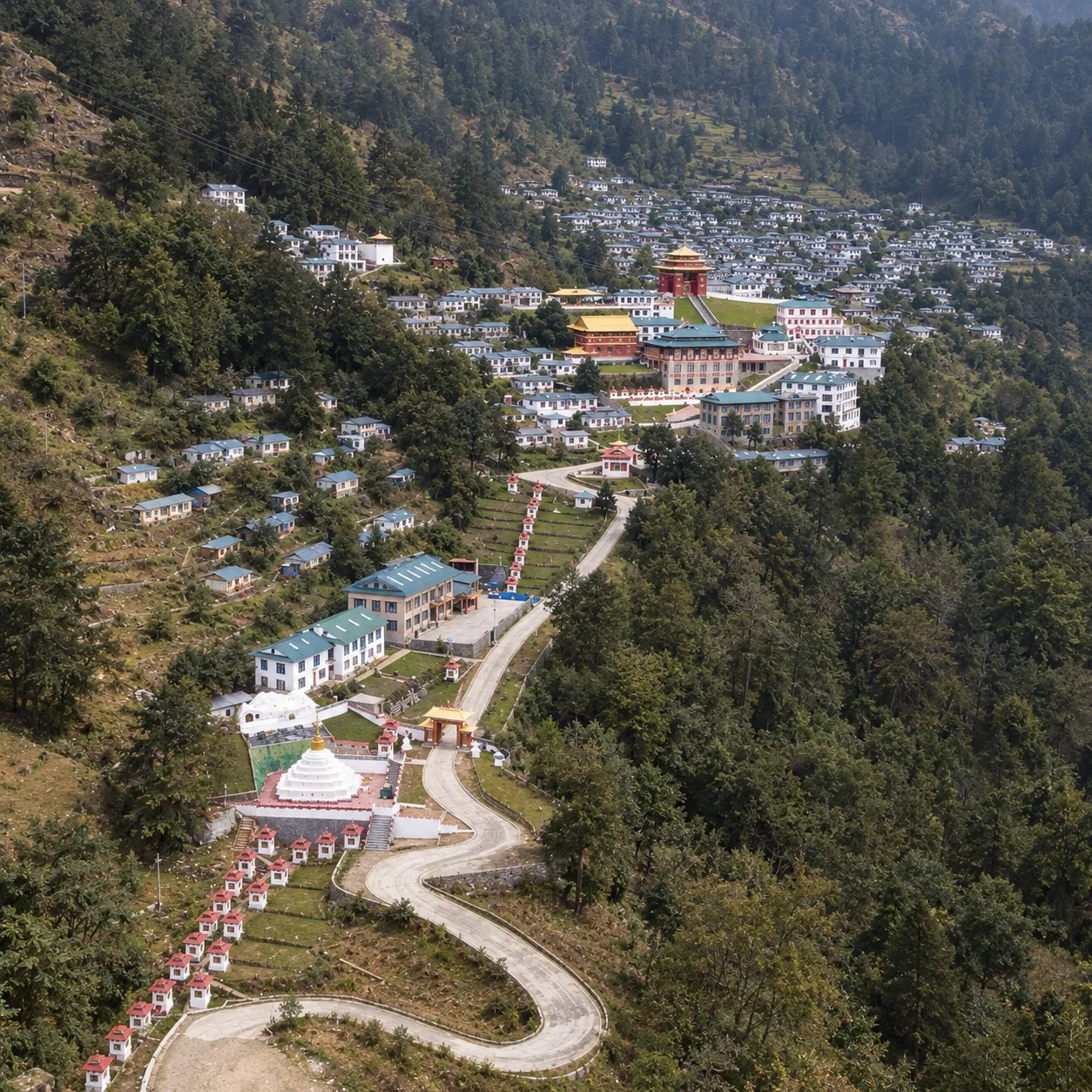
One of the features of Thupten Choling Monastery in Junbesi that makes it popular is the traditional Tibetan Buddhist architecture of the monastery. The monastery consists of a central religious complex with small buildings around it where monks and nuns live and work. The buildings are stretched along the hillside, creating a wonderful scenery of the green forests and mountains of Solukhumbu.
The traditional design of Thupten Choling Monastery is related to Tibetan Buddhism, with decorated doors, religious paintings and prayer halls. The traditional decorations of the monastery make the building look beautiful, and at the same time they reflect Buddhist beliefs and teachings. The architectural design of the monastery was created according to the Rongbuk Monastery in Tibet.
The reconstruction and repair of the buildings of Thupten Choling Monastery have been done throughout the years. Nowadays, it is possible to visit the outdoor areas of the monastery, which are available for tourists. It makes the monastery interesting for sightseeing, photography and cultural visits.
Main Prayer Hall and Buddhist Artwork
The prayer hall is among the most important structures within the Thupten Choling Monastery. Here, monks and nuns pray and conduct different kinds of Buddhist practices. The prayer hall is adorned with colorful Buddhist paintings, religious statues and artworks. Visitors are allowed to view the prayer hall when given permission to do so.
Among the interesting items that one will find at the prayer hall are mural paintings. These wall paintings depict Buddhist images that teach Buddhist beliefs. Traditional thangka paintings and other religious statues are some of the artworks found at the prayer hall.
Visitors are supposed to remain as quiet as possible since the prayer hall is a spiritual place. Shoes should be taken off, and photographs should be taken only after seeking permission to do so. Areas may be restricted from the general public depending on what’s taking place.
Prayer Wheels, Stupas and Religious Symbols
Some of the religious objects found at Thupten Choling Monastery in Junbesi include prayer wheels, stupas and prayer flags of various colors. All these objects are an integral part of Tibetan Buddhist culture.
The prayer wheel is a cylinder having some sacred mantras or prayers from Buddhism printed on it. As per the tradition of Buddhism, the prayer wheels are supposed to be rotated clockwise in the context of prayers. The stupas are known as chortens in Tibetan Buddhism, and are symbols of Buddhism itself. There are other religious items as well that you can come across, like some rocks bearing sacred mantras.
Prayer flags are one of the most attractive features of the monastery. Prayer flags have been used for centuries in Tibetan Buddhist societies, with each color signifying a different element of nature. Traditionally, there are five prayer flags, including blue, white, red, green and yellow. All these flags have prayers and blessings written on them.
Monastic Life and Daily Prayers
One of the most valuable experiences at Thupten Choling Monastery is the chance to learn more about the everyday life of Buddhist monks and nuns. This place is different from other tourist attractions because it is a living Buddhist community where the members of the monastery lead an active life of studying Buddhist principles, praying, meditating and performing daily duties.
The prayer ceremonies are one of the important aspects of the monastic life. The monks and nuns get together to read the sacred texts, sing the Buddhist mantras, and perform the ritual practices. It will be possible for visitors to watch all of these processes when access is allowed. The sound of peaceful chanting and watching rituals will allow tourists to learn more about the traditions of Tibetan Buddhism.
However, you should keep in mind that the monastery is, first of all, a place for prayers. It is essential to be silent, not to interfere in prayers and not to invade the privacy of the monks and nuns. It is necessary to get permission to enter the prayer room and take pictures.
Surrounding Hills and Valley Views
Apart from religious and cultural features of Thupten Choling Monastery, there are also beautiful views of the surrounding Junbesi Valley. The monastery is situated in an environment of forested hills, terraced slopes and mountain landscapes, thus providing an attractive place to relax in nature.
The hiking path from Junbesi leads along green hills, forests and mountain environments. On the way, you can breathe fresh mountain air, hear birds, and enjoy natural views of lower Solukhumbu. In spring, you may see flowering rhododendrons (the national flower) in some parts of the surrounding forest, whereas in autumn, there is usually nice weather for walking.
From the location of the monastery, you can admire the view of the surrounding hills, settlements, and mountain landscape of the valley. The quiet environment is perfect for photography and walking. Whether you are interested in Buddhist culture or not, the environment of Thupten Choling Monastery is worth seeing.
How to Reach Thupten Choling Monastery?
The Thupten Choling Monastery is located around the village of Junbesi, in the lower Solukhumbu district of Nepal. Junbesi happens to be the main entry point into the area, and visitors get to the area via Phaplu, which has road and air links. From Phaplu, travelers have the option of using the walking path or road journey towards Junbesi depending on the season. From Junbesi, there is a hike to reach the Thupten Choling Monastery.
Kathmandu to Phaplu by Road
The most frequently used route to travel to Thupten Choling Monastery in Junbesi is by road from Kathmandu to Phaplu. This route covers a total distance of 260 to 270 kilometers and takes about 8 to 12 hours to reach there by jeep or bus. You can take a shared or private jeep and local bus according to your convenience.
The frequently used route passes through places such as Dhulikhel, Khurkot, Ghurmi, Okhaldhunga, and Salleri before reaching Phaplu. The route is full of green mountains, terraces, rivers and villages located on the mountains. Though the route is quite long, one gets an opportunity to see the natural beauty of the east of Nepal.
There are different types of road conditions along the route. Some parts of the route are paved roads, while others are narrow mountain roads, and some parts contain steep turns and rough terrain. During monsoon, heavy rainfall causes muddy roads, landslides and travel delays, so it is wise to use a four-wheel-drive jeep in such situations.
Travelers are recommended to leave Kathmandu in the morning in order to get to Phaplu while there is still daylight. It will be wise to assess the road situation in advance and carry some drinking water, food, and warm clothes along. After getting to Phaplu, visitors can spend a night there or proceed to Junbesi depending on their time.
Phaplu to Junbesi Village
After traveling through Phaplu, you will be able to proceed further up to Junbesi Village, which marks the starting location for Thupten Choling Monastery visit. Junbesi is a pretty Sherpa village situated at an elevation of about 2,700 meters (8,858 feet). It can be reached both via the conventional trekking route and road transportation.
The walk from Phaplu to Junbesi takes around 4 to 5 hours, depending on the walking speed of tourists. The walk involves walking through Salleri as well as trekking through beautiful routes that have pine trees and terraced fields. The route allows tourists to take fresh air as well as enjoy the scenery and village life of Lower Solukhumbu area.
For those who prefer to walk less on foot, there is another route that leads to Junbesi by road. But the availability of jeeps on that route depends on the season and road conditions, as roads can be slippery in the rainy season.
After reaching Junbesi, you can unwind at the teahouses or guesthouses available there before heading to Thupten Choling Monastery. Moreover, there are various places to see in the village, including traditional Sherpa homes, Buddhist heritage and scenic valley landscapes. Junbesi is recommended for an overnight stay for those planning to visit the monastery.
Hiking from Junbesi to Thupten Choling Monastery
Walking from Junbesi village to Thupten Choling Monastery entails an enjoyable hike through the beautiful hills of Lower Solukhumbu region. The monastery lies at a distance of 3-4 km from Junbesi village, and walking on the uphill path takes about 1.5 to 2.5 hours. The path can be walked comfortably by any fit person.
The path starts from the northern part of Junbesi village, following the Junbesi Khola River. You will go along the terraced fields, passing through the village and the pine forest. Further, you will cross a suspension bridge by the Mopung powerhouse and move up the hill, passing near Buddhist stupas and prayer flags.
As the tourists come close to the monastery, you can easily spot the traditional Tibetan Buddhist-style buildings among the calm mountain landscape. Once you have reached Thupten Choling, you will have enough time to explore the architecture, go around the monastery and learn more about the lifestyle of Buddhist monks and nuns. The route used on the way back is exactly the same as used while coming down from Junbesi to Thupten Choling.
Thus, this can be considered a half-day tour. Nepal Tourism Board’s plan for rural tourism gives nearly four hours for this hike. In order to have an easy trekking experience, you need to have good hiking boots, drink plenty of water and start early in the morning. Spring and autumn are two of the best times for hiking.
Thupten Choling Monastery Distance and Travel Time
Thupten Choling Monastery is situated near the village called Junbesi in the Solukhumbu district of Nepal, at a distance of around 260- 270 km from Kathmandu by road to Phaplu, then traveling to Junbesi and climbing up through some hills. One can travel to Phaplu by road or air and then move further towards the monastery.
Below is the table that highlights the approximate distance and time required on the major routes to reach the monastery.
| **Route ** | Approximate distance | Travel time |
|---|---|---|
| Kathmandu to Phaplu by road | 260–270 km | 8-12 hours |
| Kathmandu to Phaplu by flight | 122–126 km by air | Around 45 minutes, if operating |
| Phaplu to Junbesi on foot | 11 to 14 km (about 7 to 9 miles) | 4-5 hours |
| Junbesi to Thupten Choling Monastery on foot | Around 3-4 km | 1.5-2.5 hours |
| Junbesi to Thupten Choling Monastery and back | Around 6-8 km | 3-5 hours |
Note: These travel times are only estimates and not exact timings. According to the Nepal Tourism Board, it is mentioned that there is another shorter path to the monastery.
People travelling from Kathmandu must have at least one night in Phaplu or Junbesi prior to arriving at the monastery. Even though flights to Phaplu will save you time, there are only a few flights that may sometimes depend on mountain weather. The road can take time too, depending on the narrow mountain roads and rain during monsoon.
It would be better if travelers start walking from Junbesi in the morning since they need to have plenty of time for visiting the monastery.
Best Time to Visit Thupten Choling Monastery
Spring season (March to May) and autumn season (September to November) are the best times to visit the Thupten Choling Monastery. You can experience a good climate, and the landscapes around the monastery in the Himalayan region will look their most beautiful. In these seasons, you will experience pleasant weather to trek from Junbesi village to the monastery.
During the spring season, the hills near the monastery will become green, and the flowers of the rhododendron plant will bloom in some parts of the forest. The weather will be mild, so it will be great for walking and sightseeing. Another season which is worth visiting the monastery is autumn. During autumn, you will have cool weather and clear sky with beautiful views of the surrounding mountains. October and November will be perfect months for those who wish to visit the monastery as well as trek in Solukhumbu region.
Visiting the monastery during winter and monsoon is also an option; however, visitors should take into account the weather conditions. Winter will bring cold mornings and evenings, and the monsoon season will be characterized by rain, which will make hiking trails slippery. Road trips to Phaplu and Junbesi will also be challenging due to rain.
Seasonal Weather and Visiting Experience
| **Season ** | Weather conditions | Visiting experience |
|---|---|---|
| Spring (March-May) | Mild days, cool mornings, and occasional rain | Excellent for hiking, sightseeing, and enjoying flowering hillsides |
| Autumn (September-November) | Generally clear skies, cool temperatures and good mountain visibility | Ideal for monastery visits, photography, and trekking |
| Winter (December-February) | Cold mornings and nights, with possible frost or snowfall | Peaceful surroundings but colder hiking conditions |
| Monsoon (June-August) | Frequent rainfall, clouds and high humidity | Green landscapes, but slippery trails and possible travel delays |
October, November, April and May are ideal times for visiting the Thupten Choling Monastery, as these are when one will experience a comfortable journey. Nevertheless, mountain weather conditions tend to change fast, and hence one is advised to keep a check on the weather conditions in advance.
Entry Fee, Opening Hours and Visitor Guidelines
Visitors interested in discovering the culture of Tibetan Buddhism are more than welcome to visit Thupten Choling Monastery. This place is ideal for those interested in enjoying peace, but it is also a place where monks and nuns pray and meditate throughout the day. It would be best to be aware of the rules of the monastery so as not to disturb them.
The table below provides useful information for planning a visit:
| **Visitor information ** | Details |
|---|---|
| Entry fee | Free entry for all visitors |
| Opening hours | Open 24 hours |
| Best time of day | Morning is recommended for a peaceful visit |
| Photography | Ask permission before photographing monks, nuns and religious interiors |
| Prayer hall access | May be allowed with permission, depending on religious activities |
| Visitor access | Outside locations may be accessible while private and unauthorized zones must not be accessed. |
| Donations | Voluntary contributions can be valued |
It is recommended to follow some guidelines while exploring Thupten Choling Monastery in Junbesi:
- Dress respectfully: You should wear modest clothes while visiting the temples.
- Be quiet: Be silent in prayer hallways and meditation spots.
- Get permission for pictures: Do not take pictures of monks, nuns, or worship services without first obtaining permission.
- Respect religious traditions: Walk around stupas and prayer structures in a clockwise direction, while following the local customs.
- Follow monastery instructions: Remove your shoes when required and avoid entering restricted rooms.
- Keep the surroundings clean: Do not leave trash or damage religious objects, prayer flags and monastery property.
Accommodation, Food, and Facilities in Thupten Monastery
Travelers who wish to tour the Thupten Choling Monastery will be able to find good-quality and cheap accommodations in the neighboring villages of Junbesi and Phaplu. Though the monastery is situated in a serene mountainous region that lacks proper tourist facilities, there are teahouses, family-run guesthouses, and local lodges in these nearby villages. Tourists will be able to taste traditional Nepali food, get Sherpa hospitality, and rest after hiking through the picturesque region of lower Solukhumbu.
Junbesi Village is the best place to stay while touring Thupten Choling Monastery. There are several family-run lodges and teahouses in the village that provide visitors with simple rooms, warm bedding and home-cooked meals. Some of the guesthouses even have hot showers and attached bathrooms. This village makes an ideal place to stay for tourists wishing to tour the village and monastery leisurely.
Those who seek other options for staying can consider Phaplu. The place provides hotels, guest houses and even homestays that differ in comfort level. Some of the facilities have private toilets, Wi-Fi, and showers. It is a good place for having an overnight stay before moving to Junbesi or going back to Kathmandu.
The food that can be found around Junbesi includes Nepali and trekking food. You will be able to eat dal bhat (rice, lentils, and vegetables), vegetable curry, noodles, fried rice, potatoes, soups, and momos, depending on the menu of a particular lodge. Some of the guest houses offer their own home-made bread, apple pie, and fresh vegetables. A cup of tea after trekking can be a very pleasant experience.
Visitors should make prior arrangements for accommodation during the spring and autumn months, which are peak seasons for trekking, particularly in April and October. It is also wise to have some Nepalese money since there are no ATMs in Junbesi. The services in terms of food and lodging are not comparable to those in more touristy destinations; hence, it is advisable to have an idea of the facilities in each lodge, meals and prices beforehand. In order to have a comfortable visit to Thupten Choling Monastery, it is wise to spend at least one night in Junbesi.
Places to Visit Near Thupten Choling Monastery
Apart from exploring Thupten Choling Monastery, tourists can also go to many scenic villages, Buddhist monasteries, and trekking spots in the lower Solukhumbu region. This part of the region contains many places where tourists can enjoy scenic views of Himalayan mountains and Sherpa culture.
Junbesi Village
Junbesi is a quiet village home to the ethnic Sherpa people. Junbesi is renowned for its unique stone houses, Buddhist religion, and friendly community members. It is an excellent destination where one can immerse oneself in the life of the countryside of Solukhumbu. One may visit local monasteries, wander around the village and stay in the family-owned teahouses.
Phaplu and Salleri
Places like Phaplu and Salleri are very significant for accommodation and travel in the lower Solukhumbu region. Phaplu has a domestic airport, whereas Salleri functions as the district headquarters. One can have a look around local markets, taste the cuisine and plan further for their journey towards Junbesi.
Chiwang Monastery
The monastery of Chiwang is a historical Buddhist temple which is built on a hill in the Phaplu area. The Chiwang Monastery was built in the early twentieth century and is famous for its historical construction and for the Mani Rimdu festival, which includes a performance of masked dances and Buddhist rituals.
Pikey Peak
Pikey Peak is a popular site for trekking in the lower Solukhumbu area due to the scenic beauty of the Himalayas. It is about 4,065 meters tall and provides scenic views of the sunrise, along with views of Mount Everest and Kanchenjunga. Pikey Peak Trek can be recommended to people who love nature and adventure because there are Sherpa villages and forest trails on this route.
Dudh Kunda Lake
Dudh Kunda Lake is a sacred lake situated at the base of Mount Numbur. This lake is surrounded by the beautiful landscapes of the Himalayas and is a sacred place for Hindus and Buddhists. This place is famous amongst the pilgrims and adventure trekkers. Unlike other attractions in the region, Dudh Kunda is an attraction that takes more than a day to visit.
Short-term visitors can visit Junbesi and Thupten Choling Monastery, and those who plan to stay for a longer period of time can visit Chiwang Monastery, Pikey Peak or Dudh Kunda Lake.
Is Thupten Choling Monastery Worth Visiting?
Indeed, Thupten Choling Monastery in Nepal is worth visiting, especially for people who are interested in Tibetan Buddhism and Sherpa culture or who want to see picturesque places in the Himalayas. This place is situated in Junbesi village in Solukhumbu district of Nepal and gives people an opportunity to study Buddhist architecture and experience religious life.
Thupten Choling Monastery is one of the most interesting monuments to visit in Nepal due to its rich religious and cultural background. Founded by Trulshig Rinpoche in 1968, this monastery has become the centre of Buddhist studies in this area. People can visit this place, watch prayers when it is allowed, examine some samples of Buddhist artistic heritage and get acquainted with monks’ and nuns’ lives.
The trip to the monastery itself is an essential part of the experience too. There is a scenic hike from Junbesi that goes through forests, local villages and wonderful hillsides. In the absence of mass tourism, the monastery offers an opportunity to enjoy the natural beauty and cultural heritage of lower Solukhumbu.
For those who would like to combine culture and adventure, the Pikey Peak Trek provided by Adventure Great Himalaya can be considered. There will be a visit to Junbesi and Thupten Choling Monastery, and also viewing of the magnificent Himalayas. It is essential that one understands the whole process regarding the visit to the monastery and other plans.
In general, visiting the Thupten Choling Monastery is a great plan for someone who wants to explore Nepalese culture aside from trekking places.
Combining Thupten Choling Monastery With a Wider Solukhumbu Trip
A visit to Thupten Choling Monastery can be included in a trip through the beautiful Solukhumbu region in Nepal. In addition to visiting the monastery, you may also visit other places like the traditional Sherpa villages, historic Buddhist sites, and even trekking destinations in the area. Visiting all these places together will give you an opportunity to see the best of the Himalayan region.
An ideal starting point would be Junbesi village. This place offers tourists the opportunity to visit traditional stone houses, teahouses and Buddhist monasteries. You can learn more about the way of life of Sherpas and their customs in Junbesi village. The trip to Thupten Choling Monastery can also be combined with a visit to this village.
The second choice could include the tour to Phaplu and Chiwang Monastery. This area serves as the gateway to lower Solukhumbu, which is located on a hilltop. Chiwang Monastery is famous for its Tibetan Buddhist culture and Mani Rimdu festival. These places are ideal for you if you are interested in local history, religion and cultural sightseeing.
For adventurous travelers, Pikey Peak Trek is one of the best choices as it offers beautiful hiking trails through forests, Sherpa settlements and mountain landscapes. Moreover, you can get an opportunity to see the sunrise at the summit of Mount Everest and other famous mountains on a sunny day. Therefore, it is possible to include both Junbesi and the monastery in one itinerary during trekking.
It is recommended for those who have enough time to go on Dudh Kunda Trek, which leads to the sacred mountain lake. However, it takes many days to reach Dudh Kunda. Therefore, this route is perfect for those who want to spend many days in the mountains.
Thus, there is no perfect choice, and each of the above combinations should be based on your free time, physical condition, and interests. In order to create the most appropriate schedule for your trip, you can contact Adventure Great Himalaya and organize the Solukhumbu tour including Thupten Choling Monastery, Junbesi and other nearby attractions.
Why Explore Solukhumbu With Adventure Great Himalaya?
A visit to the picturesque Solukhumbu area becomes easy with the assistance of an experienced local trekking company from the region. Adventure Great Himalaya is a Nepal-based trekking and travel company that arranges treks, cultural tours and Himalayan adventures for tourists. The company provides experienced local guides and offers customized travel options for exploring the region’s scenic beauty.
One of the popular tours offered by the agency is the Pikey Peak Trek, which takes tourists through forests, peaceful villages and viewpoints overlooking the Himalayas. The tour also features an excursion to Junbesi village and Thupten Choling Monastery, where the tourists will be able to get acquainted with Tibetan Buddhist culture and traditions. The tour will offer excellent chances to observe the picturesque Mount Everest and other peaks of the Himalayas.
Adventure Great Himalaya will be glad to provide you with transportation services, local guides, meals, accommodations and even a tailor-made itinerary depending on the wishes of the tourists. Therefore, if you wish to explore the Thupten Choling Monastery in Junbesi or join sightseeing with trekking, Adventure Great Himalaya will do its best to make your trip comfortable in Solukhumbu.
Conclusion
Thupten Choling Monastery is one of the significant religious locations of Buddhism near the Junbesi village in the Solukhumbu District of Nepal. This monastery was founded in 1968 by Trulshig Rinpoche and holds great importance in the conservation of Tibetan Buddhist philosophy, culture, and traditions. The beauty of its architecture, serene prayer halls and scenic views of Himalayan ranges make it a unique place to visit for history lovers and culture enthusiasts.
Thupten Choling Monastery offers its visitors much more than mere tourism. You can get to know the lifestyle of Buddhist monks and nuns, enjoy the serene environment of this place, and go hiking at the same time through the Junbesi Valley. The tour of Thupten Choling Monastery can also be combined with other interesting places like Phaplu, Chiwang Monastery and Pikey Peak of Solukhumbu.
FAQsWhere is Thupten Choling Monastery located?
Thupten Choling Monastery is situated near Junbesi Village in the Solukhumbu district, Koshi Province of Nepal. It is surrounded by green hills and a breathtaking mountain landscape.
What is the altitude of Thupten Choling Monastery?
Thupten Choling Monastery stands at approximately 3,000 meters (9,843 feet) above sea level, in the lower Solukhumbu region of Nepal.
Who founded Thupten Choling Monastery?
The Thupten Choling Monastery was established by Kyabje Trulshig Rinpoche, a highly revered Buddhist monk of Tibet known for his efforts in preserving the Buddhist religion.
When was Thupten Choling Monastery built?
The Thupten Choling Monastery was built in 1968 AD after Trulshig Rinpoche left Tibet in 1959 and settled in Nepal.
Why is Thupten Choling Monastery famous?
The monastery is famous for its large Buddhist community, which includes monks, nuns, traditional Tibetan Buddhist practices, religious education and peaceful Himalayan surroundings.
How do I reach Thupten Choling Monastery from Kathmandu?
You can reach Thupten Choling Monastery by road or by domestic flight when it is available. From Phaplu, you can proceed toward Junbesi Village and then hike uphill to the monastery.
How far is Thupten Choling Monastery from Junbesi?
Thupten Choling Monastery is approximately 3-4 kilometers from Junbesi Village; however, it depends on the walking route.
How long does it take to hike from Junbesi to Thupten Choling Monastery?
The journey takes 2-3 hours one-way and about 4-6 hours in total, depending on your pace and trail conditions.
What is the best time to visit Thupten Choling Monastery?
Spring (March to May) and autumn (September to November) are generally the best seasons for visiting the monastery because of pleasant hiking conditions and clearer mountain views.
Is there an entrance fee for Thupten Choling Monastery?
Unfortunately, there are no established entrance fees for Thupten Choling Monastery. You should confirm locally for information regarding the entrance fees.
Can tourists enter Thupten Choling Monastery?
Yes, tourists have access to the monastery; however, it is important to make sure whether tourists will be allowed inside the prayer halls. Be quiet, dress appropriately and ask for permission to take photographs.
Do I need a trekking permit or guide to visit Thupten Choling Monastery?
A special permit or guide is not required for a short trip to the area from Junbesi. But visitors who are going on a long trek need to verify the permit and guide requirements for their entire journey.
 Thursday, October 29th, 2026
 Friday, September 18th, 2026
 Friday, September 18th, 2026
 Sunday, September 6th, 2026
 Wednesday, September 2nd, 2026
 Tuesday, September 1st, 2026
 Tuesday, September 1st, 2026
 Thursday, May 7th, 2026
 Thursday, June 11th, 2026
 Thursday, June 11th, 2026
 Tuesday, July 7th, 2026
 Saturday, July 11th, 2026
 Tuesday, August 11th, 2026
 Monday, August 31st, 2026