

Everest Three Passes Trek
Challenging Treks In Nepal, Everest Trekking Region, High Pass Trekking In Nepal


Overview
Everest Three Passes Trek will take you to the less traveled way to the Everest Base Camp where you will have a magnificent view of the mountains such as Mount Everest, Mount Lhotse, Mount Ama Dablam, Mount Nuptse, Mount Thamserku and many more.
Everest Three High Pass Trek is one of the most challenging treks in the Everest region, Nepal. If you are one of those who like to experience more thrilling and adventurous trek then this Everest 3 Pass Trekking is best for you.
3 Pass Trek In Nepal is a truly lifetime Adventure journey to Himalaya , This Adventure trip take you 7 Superb destination over 5 thousand meter Namely, Renjo la Pass (5388 m), Cho La Pass (5380 m) and Kongma La pass(5535 m) With climbing of the three peaks Gokyo Ri (5483 m), Kalapathar (5545m) , Chukung Ri (5550 m) and EBC (5416m)
It is a trek with unparalleled alpine beauty and without doubt the grandest mountain scenery on the world. The highlights of the trek include the Sherpa village of Khumjung, the pristine Gokyo lake, the breathtaking scenery from the all these passes and the visit to Everest base camp. Unlike other treks in Everest region, this trek makes a loop, hence no tracing back of the route. The good thing about this Three pass trek is despite having to cross three passes, you do not require any technical climbing and any person with good fitness and previous trekking experience can complete the trek successfully.
Everest Three Passes Trek Route
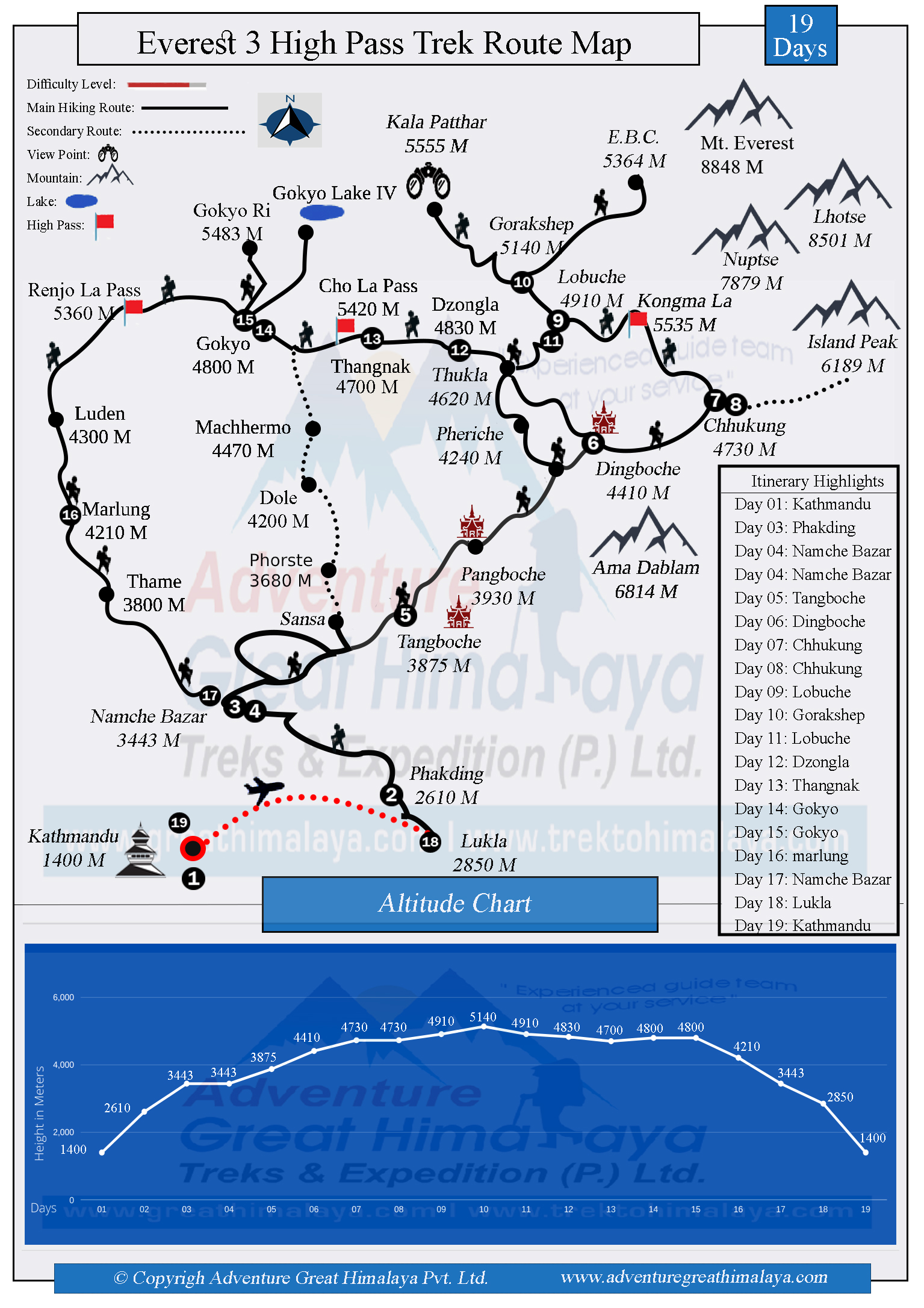
The Everest three Passes Trek begins the next day after your arrival. You first fly to Lukla, viewing beautiful scenarios, and then trek to Phakding crossing several suspension bridges.
From there, you head to Namche, entering the Sagarmatha National Park, and acclimatize there. During the rest day, you explore the nearby villages and the next day trek to Tengboche to visit the famous monastery.Then ascending the trails, you head to Dingboche and later to Chhukung for your second acclimatization. This time you hike around the hills and explore the Imja valley.
You cross the first high pass Khogma-la and head to Lobuche the following day. From Lobuche, you walk uphill to Gorak Shep, have your lunch there, and hike to Everest Base Camp.You spend some time there reaching the base and later descend to Gorak Shep. You hike to Kala Patthar for a sunrise view and later drop back to Lobuche the following day.
From Lobuche, you trek to Zhonglha and next day head to Thangma crossing the second high pass Cho-La. Then continuing the trip, you move towards Gokyo and have your third acclimatization there.
On this day, you explore the valley and visit the lakes. The following day you cross the final pass Renjo La and descend to Marlung. From here, you hike back to Namche while descending the trail and the next day head to Lukla. From Lukla, you fly back to Kathmandu and end the trekking journey.
Highlight of 3 Pass Trek Nepal
-
- Hiking across the three major High Passes such as the Renjo La Pass, the Cho La Pass, and the Khogma La Pass.
- Trek to the remote and untouched area of the Everest region.
- Gorgeous view of the mountain ranges such as Mt. Everest, Mt. Lhotse, Mt. Ama Dablam, Mt. Nuptse, Mt. Thamserku and many more.
- Exploration of the Himalayan Sherpa Community.
- Visit Everest Base Camp and climb Kala Patthar.
Best Time to Everest 3 Passes Trek
The Everest 3 pass Trek is doable in all the months in Nepal. But for a less challenging trek, it is better to trek the Everest 3 High Pass in Autumn and Spring seasons.
Autumn (September, October, November)
Autumn is the festive season for trekkers from all around the world for trekking In Nepal. The weather conditions in the month of September, October, and November are mostly suitable for trekking the Everest 3 High Pass.
Autumn is one of the peak seasons in Nepal for trekking. The temperature during this season is neither too hot nor too cold which fits for trekking. If you wish to trek the Everest 3 High Pass Trek in Autumn, you can also celebrate some of the major festivals in Nepal that falls during Autumn.
Spring (March, April, May)
Spring is one of the best times of the year where beautiful flowers bloom and new leaves start to grow. The whole environment becomes green which gives you fresh air and pleases your eyes.
During spring, Nepal looks ever more beautiful in nature. You will have clearer scenic mountain views during the season of Spring. The temperature and weather condition of the Everest Region is also favorable.
You may expect some light rainfall in late May. But, don’t worry, the view you get to explore in the next morning is splendid.
Everest Three High Passes Trek Difficulty
Everest 3 High Passes Trekking is a challenging trek as you have to climb to a higher altitude and pass some of the difficult passes such as Renjo La Pass, Cho La Pass, and Kongma La Pass. These passes are one of the most challenging and physically demanding parts of the Everest trekking.
As you will trek to a higher altitude, you might have some difficulty in breathing. The amount of oxygen becomes thinner as you move to a higher altitude. Because of this, you may also face Acute Altitude Sickness.
The difficulty level of the trek increases if you trek during the monsoon season. During the monsoon season there are heavy rainfalls making the route muddy and slippery. You must be careful with your steps. Therefore, it is best to avoid trekking in Monsoon if you are a beginner. If you are an experienced trekker, then you are sure to enjoy every hurdle in any seasons.
Similarly, during winter, the Everest region is precisely enclosed with snow. This will cause difficulty in walking and passing the trails.
Everest Three Passes Trek Cost
Everest Three Pass Trek Itinerary
Cost Include / Exclude
Service include
- Airport/ Hotel/Airport transfer
- Three night’s at 3 Star Hotel in Kathmandu including breakfast
- Meals: 3 Meals A day During The Trek ( Breakfast, Lunch and Dinner)
- All Trekking permit and necessary company paper work.
- Domestic Flight Ticket ( Kathmandu to Lukla / Kathmandu/ domestic airport Tax., (The baggage limit is only 10 kg and hand carry 5 kg.)
- Accommodation in Trekking; All accommodations in lodges/tea houses during the treks.
- ‘Trekkers’ Information Management System (TIMS) Permit.
- Trekking Guide : An experienced, helpful and Government license Holder English Speaking Trekking Guide.
- Trekking Porter- Carry your luggage.
- Trekking equipment sleeping bag, Down Jacket, walking Poles, Crampons ( refundable after the trek)
- Oxe -Meter- To Check your oxygen saturation and heart rating
- Adventure Certificate and Trekking map.
- Company Duffel bag and T-shirt
- Arrangement of Emergency Helicopter service which will be paid by your Travel insurance company.
- Medical supplies (first aid kit will be available).
- All government taxes.
- Service charge.
- Farewell Dinner
What’s excluded
- Nepal entry visa fee (you may easily issue the visa upon your arrival at Tribhuwan International Airport – Kathmandu).
- International air fair and personal Travel insurance.
- Lunch / Dinner in Kathmandu.
- personal expenses. Like Phone call, laundry service, extra porter, battery recharge etc.
- All Hot and bottle of drinks
- Tips for the guide, porter
More Trip Info
How long is the 3 Pass Trek Nepal ?
The 3 Pass Trek Nepal journey is 21 days long in total. It includes the trekking duration, time spent in Kathmandu, airport transfer services, and one spare day.
The journey includes 18 days of trekking and the trekking phase includes 2 acclimatization days. The remaining days are allocated for your Kathmandu hotel stay, airport pickup and drop-off and travel flexibility.
The trekking part which lasts 18 days and 17 nights gives you sufficient time to undertake the three difficult high passes of the Everest area at a manageable pace.
It becomes very important to have acclimatization as the trek progresses, since the trek eventually leads you above an altitude of 5,000 meters. So, two acclimatization days are set aside for your body to get adjusted to the increasing altitude levels.
Besides, the 3 nights and 4 days in Kathmandu cover your Kathmandu accommodation/hotel stay as well as airport transfer arrangements. One extra buffer day is included at the end of the trek if your plane from Lukla is unable to take off due to bad weather conditions. The additional day will give more flexibility and will contribute to your comfortable travel experience.
Overall, the 21 days schedule is intended to allow you enough time to complete the trek, acclimate and make arrangements in Kathmandu as well as have some additional time in case of any delays or issues with flights.
Everest 3 Pass Trek Travel Insurance
Everest 3 pass trek Required Travel Insurance, The Adventure Travel Insurance allows you Trekking in Himalayas above 5000m with confidently, Travel insurance is very important for your safety In the event of any high altitude sickness or injury, the cost of emergency treatment and evacuation is shocking., Therefore, travel insurance is strongly recommended for everyone who joins with Adventure Great Himalaya , Be ensuring that your travel insurance covers you for altitude or not, Most standard policies do not cover for walking up more than 3000 meters altitude.
Everest 3 Pass Trek Permits and Entrance fees
As with other treks in Everest, you will need 2 different permits for this Everest High pass Trekking. They are Everest (Sagarmatha) National Park Entry Permit and Khumbu Pasang Lhamu Rural Municipality Local Tax.
The Sagarmatha National Park permit cost $ 30. It can be bought in Kathmandu or en-route to Jorsalle before Namche Bazaar. And for the Khumbu Pasang Lhamu Local Tax, you have to pay $ 20 in Lukla.
Lukla Flights & Weather Condition
Lukla is in small Town of Solukhumbu district of Nepal. It is at 2,840 m elevation above the sea level.
There are 3 Airlines Company that operates flights every day in the fair weather. It is small twineter plane and accommodates around 12, 13 people. The flights leave early in the morning because it cannot be said how the weather goes in the afternoon.
The flight to Lukla often gets cancelled due to bad weather. It usually happens in peak season. In the case your flight gets cancelled, you can have the alternative of taking helicopter. A helicopter can carry 4 or 5 people. It costs $ 350 to $500 per person.
The other important lukla flight information is That the Lukla Flight will be divert from Manthali airport, Ramechhap in peak season like month of October, November and March , April, The drive take about 4, 5 hour from Kathmandu,
Accommodation on the Everest Three Pass Trek
The route of Everest Three Pass Trek has several tourist-friendly tea houses with basic accommodation facilities. The rooms are the twin-sharing type for this trek, but you can also get luxury suits at lower regions by paying an additional price.
Compared to other trekking routes, the accommodation services in this trail have advanced and developed throughout the years. Nowadays, they provide you with spongy mattresses, electric blankets, hot showers, and more.
But the facilities are limited to lower regions only, as the lodging is still simple in the upper parts. You will find a wooden bed with hard mattresses, a pillow, and a blanket.
Toilets and Bathroom Facilities on the Trek
The Everest Three Pass trek trails lie in the Himalayan region of Nepal, where most of the areas are still underdeveloped. So, there are no public toilets available on the routes.
If you have to pee or poop while walking on the trail, you either go to the bushes or near the roads. So, do not feel embarrassed as everybody does the same.
Moreover, lodges and tea houses have proper toiletry, but most have pan style instead of sitting one. However, attached bathrooms are limited to lower areas only as upper regions have common toiletry.
Also, you should know that people living in these areas use water after pooping, so do not forget to carry toilet paper and tissues for yourself.
Meals On Everest Three Passes Trek
We will be providing you a welcome or farewell dinner in Kathmandu and (Breakfast, Lunch, Diner ) throughout the Trekking . You can have any meal on the basis of your choice. There are a variety of options from typical Nepali dal-bhat, soups, snacks, momos, fried rice, to Chinese and continental dishes like noodles, spaghetti, spring rolls, and steak. The breakfast and dinner will be served in the lodge where we spend night and the lunch will be on the way in our destination
Trekking Guide for Everest Three Passes Trek
Trek to Everest Three Pass, suggest hiring a guide for a better experience. Guides are great partners, navigators, and communicators who make your journey a lot safer.
Only professional and licensed guides can trek in these routes so that you can be relieved about their experience. They are the first responder in case of injuries and emergencies.
If you wish to hire a guide, then make sure they are fluent in other languages to make the communication easier. A guide also acts as a mediator between you and the local peoples and tells you about their culture, history, and lifestyles.
Hiring a Porter for the Three Passes Trek
Traveling with a porter is also beneficial as they carry your load during the trek and become your closest companion.
Porters are residents of this region who have made several ups and downs in these trails. So, with their years of experience, they know several shortcuts and safe paths.
They carry all your baggage, belongings, and trekking gear, but the weight limit is from 20 to 30 kilograms only. Also, they only speak basic English, so communication can sometimes be a burden. However, they are very friendly, helpful, and fun people who entertain you throughout the trek.
Everest Three Passes Trek Preparation
Proper preparation is crucial when preparing to embark on the Everest Three High Passes Trek which is among the toughest trekking trails in the Everest region.
The 21 day itinerary involves several long trekking days and crossing three passes which include the Kongma La, Cho La, and Renjo La together with other high altitude stops like Everest Base Camp, Kala Patthar, and Gokyo Ri.
Being physically fit is necessary and having previous experience of trekking is an added advantage. Training for this trek includes regular hiking, uphill walking, stair climbing and cardio workouts to build endurance and leg muscles. A long hike with a loaded backpack is recommended in order to adjust to trekking conditions.
You will need to bring trekking boots that have been well broken in, warm layered clothing, waterproof outerwear, gloves, hat, sunglasses, sunscreen and an appropriate sleeping bag.
Due to the high altitudes involved proper acclimatization is key. Follow the scheduled acclimatization days at Namche and Chhukung, maintain a consistent pace, stay well hydrated and do not rush at higher altitudes.
Mental preparedness is just as necessary for the variable weather conditions, steep paths and difficult crossings of passes.
Everest Three Pass Trek Weather and Temperature
The daytime temperature during the trek is usually pleasant at lower altitudes but the temperature drops considerably as you ascend higher. At altitudes above 5,000 meters, nighttime temperatures can get very cold especially with the presence of strong winds that might make the climate harsher.
There is heavy snow and low temperatures during winter making it hard for trekkers to cross the high passes. The monsoon period comes with rain and cloudiness. Likewise, you can expect slippery trails and reduced visibility.
The climatic conditions in the mountains are uncertain. So, there is a need for warm, waterproof and windproof clothing for the trekkers. Another important thing to consider is the flexibility of the itinerary. The poor weather that might occur while crossing the passes and flying through Lukla can change the time and schedule of the journey.
The best seasons for trekking are spring and autumn because of the stability of mountain conditions and great visibility. You can expect to experience moderate temperatures, dry trekking paths and predictable weather during these periods.
Altitude Sickness and Prevention
Altitude sickness is a vital consideration during the Everest Three High Passes Trek as it goes up beyond 5,000 meters. You can develop altitude sickness regardless of your age and physical condition if you ascend too rapidly. Headache, nausea, dizziness, feeling unusually fatigued and lack of appetite, all these are all common symptoms of acute mountain sickness.
The best way to prevent AMS is by a slow ascent and acclimatization. Our itinerary contains acclimatization days in Namche Bazaar and Chhukung to allow your body to acclimatize to the high altitude before proceeding to the mountain passes and alpine viewpoints.
Besides, you should walk at a moderate pace, drink a sufficient amount of water, have regular meals and sleep well. Do not drink alcohol and neglect your symptoms while trying to keep up with the itinerary.
You need to inform your guide right away if you are feeling sick. It is necessary to descend to a lower altitude if your symptoms are becoming severe despite rest. In an emergency, a helicopter evacuation will be arranged which is paid for by your insurance.
Attractions of Everest Three Pass Trek
Lukla Flight
Lukla flight not only takes you to the Everest region. It marks the transition from urban Nepal to the high Himalayas. The flight provides an amazing view of the rugged hills, deep valleys and mountain ranges that lie below. It is a short, thrilling aerial journey offering a dramatic introduction to the Himalayan terrain as you make your approach towards Lukla.
Arriving in Lukla helps trekkers realize the remoteness of their trekking expedition right from the start. As a result of the sensitivity of flights to mountain weather, this part of the trip demands some degree of flexibility from trekkers. For many trekkers, the flight itself becomes one of the memorable opening moments of the Everest Three High Passes adventure.
Namche Bazaar
Namche Bazaar is the first major Himalayan settlement where the trekking experience starts to become distinctly Alpine. Located on a horseshoe shaped mountainside, Namche is essentially a hub where people come together, trade and prepare for their journey into Khumbu. It is an important site for acclimatization for adventurers traveling further into the Everest region.
Not only does Namche provide views of the mountains but it also offers the chance to immerse yourself in the culture and day-to-day activities of the Sherpas. This small town features cafes, bakeries, stores, lodges and Sherpa households which give the area quite a liveliness at such an elevation.
Everest View Hotel
Hotel Everest View provides a different perspective on the world’s highest mountain. Instead of getting to the Base Camp, people can get a superb view of Everest from an easy viewpoint above Namche. You will be surrounded by towering mountains such as Ama Dablam, Lhotse, and Nuptse.
The charm here lies in the fact that after only a few days of hiking and a short acclimatization walk from Namche, people get a chance to look over a massive landscape of the Himalayas. This is especially valuable during the initial stage of the hike, since it helps people know what mountains they will be walking among. It gives a visual preview of the mountains that will accompany the journey toward the higher valleys and passes.
Tengboche Monastery
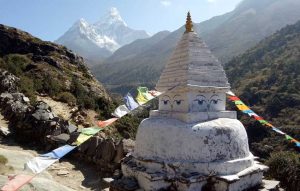
Tengboche Monastery is site of great cultural and religious significance. Located in the forest-covered hills surrounded by the majestic mountains of the Himalayas, it is the largest monastery in the Khumbu region.
The site is at a height of about 3,867 meters and is an important stop along the path to the alpine valleys and high passes above. In the monastery, trekkers get a chance to understand the Buddhist culture of the Sherpa and observe how religion remains closely connected to everyday life in the Khumbu community.
Besides having incredible cultural value Tengboche Monastery is also famous for its impressive mountain views. You will have peaks like Ama Dablam, Mount Everest, Lhotse, Nuptse and many others as part of the stunning landscape.
The combination of Sherpa culture, Buddhist practices, peaceful surroundings and amazing mountain vistas makes the Tengboche Monastery a unique attraction of the Everest Three High Passes trek.
Kongma La Pass
Kongma La is the highest among the three major high passes in the Everest region. It has an elevation of around 5,535 meters above sea level. The passage through Kongma La Pass is considered one of the most difficult parts of the trekking route, which requires adequate physical fitness and proper acclimatization.
The approach to Kongma La leads to rough terrain of glaciers, snow and dramatic mountain walls at high altitudes. Trekkers will be able to get fantastic views of Lhotse, Nuptse, Makalu, Ama Dablam, and many more Himalayan mountains from the pass. Crossing this pass is also one of the defining achievements of the Three Passes Trek, as the route goes well beyond the standard Everest Base Camp trail.
Chhukung Valley
The Chhukung Valley is a breathtakingly beautiful high Himalayan valley situated amidst some of the most popular mountains around Everest. It lies beyond Dingboche and gives you the chance to have a more tranquil and remote experience of trekking before crossing Kongma La Pass.
Trekkers can enjoy the grand views of famous mountain peaks such as Ama Dablam, Lhotse, Nuptse, Island Peak and several surrounding Himalayan ridges from the Valley. Because of its dramatic scenery with its rocky slopes, glaciated terrain and mountain peaks, Chhukung is one of the scenic attractions of the Everest Three High Passes Trek.
It also serves as an important base for exploring Chhukung Ri and preparing for the demanding high altitude sections ahead.
Chhukung Ri
Chhukung Ri is a high altitude viewpoint situated above Chhukung. It offers extensive views of the entire Imja Valley and the surrounding mountains.
The hike to Chhukung Ri itself is an attraction worth taking. It will take you off the beaten path and give you a chance to make your way up the steep mountain ridges through a rocky and exposed environment. From the higher sections of the trail, you can see magnificent peaks such as Ama Dablam, Lhotse, Nuptse, Island Peak and many others.
Chhukung Ri is especially important for the Three Passes Trek route since it allows you to climb to high altitude and gives you a chance to acclimatize before crossing Kongma La Pass.
Kala Patthar
Kala Patthar is one of the most renowned viewpoints in the Everest region. It is the place from which you can enjoy one of the closest views of Mount Everest.
Kala Patthar is situated above Gorak Shep at a height of about 5,545 meters. This alpine viewpoint overlooks the surrounding Khumbu landscape. It rewards trekkers with the fascinating panorama of Everest, Nuptse, Pumori and the Khumbu Glacier among others.
A lot of trekkers reach Kala Patthar around sunrise, enjoying the changing vista of the Himalayan mountains in the light of the morning hours.
Atop Kala Patthar you can marvel at the striking contrast between the mountain ranges, glacial valleys and snowy peaks stretching across the horizon. It is one of the most memorable days of the Everest Three High Passes Trek.
Dingboche
Dingboche is a scenic alpine village lying among towering Himalayan peaks. It is a major stop en route to the Three High Passes.
This settlement is located at 4410 meters in the Imja Valley. The landscape changes from a more wooded area at the lower elevations to open and alpine as you approach Dingboche. The village offers excellent views of the peaks of Ama Dablam, Lhotse, Nuptse, and several surrounding mountain ridgelines.
Dingboche is characterized by stone-walled fields and the wide, sloping mountains. The importance of this valley lies in the fact that it serves as an excellent acclimatization point for the areas ahead such as Chhukung, Kongma La, and beyond.
Everest Base Camp
The Everest Base Camp is one of the main highlights of the Three Passes Trek. It offers trekkers the chance to stand at the lap of the world’s highest peak. Situated in the upper Khumbu region near the Khumbu Glacier, the camp is encircled by the stunning Himalayan peaks, glaciers and moraine terrain.
Reaching Base Camp entails the combination of both the feeling of being at one of the famous mountaineering destinations and the sight of the majestic Himalayan landscape. The route via Gorak Shep and glaciers adds an element of attraction to the journey itself. To many trekkers, arriving at Everest Base Camp is the defining milestone of the whole Three Passes trek.
Cho La Pass
Cho La is the second high pass in the Everest Three High Passes Trek. It serves as the connection between the Everest Base Camp side of the Khumbu and the Gokyo Valley.
It is situated at a height of 5,420 meters above sea level. This pass is characterized by rugged high altitude terrain with several steep sections and snow/glacier formations depending on the season.
Crossing Cho La is completely different from the Everest Base Camp trekking route, as it offers extensive views of the surrounding Himalayas in an area characterized by pristine wilderness.
Renjo La Pass
The Renjo La Pass is the final high pass of our 21-day long Everest Three High Passes Trek. It links the Gokyo Valley and the Thame Valley.
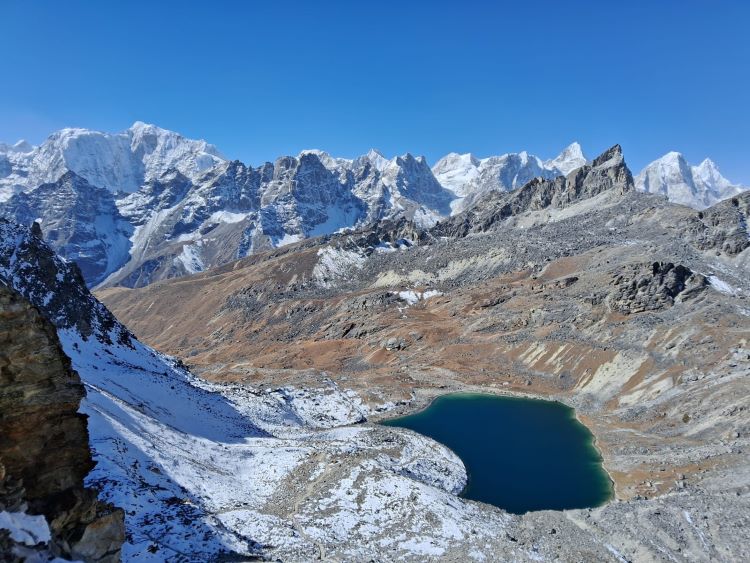
The elevation of the pass is around 5,360 meters. One of its major attractions is the view towards the Gokyo Valley, where the stunning blue lakes and the mountainous backdrop form an amazing scene.
On sunny days, one can see as far as some of the highest peaks in the Himalayas such as Everest, Lhotse, Makalu, and Cho Oyu. Crossing the Renjo La finishes off the Three Pass journey through some of the remotest areas of the Everest region.
Gokyo Lakes and Gokyo Ri
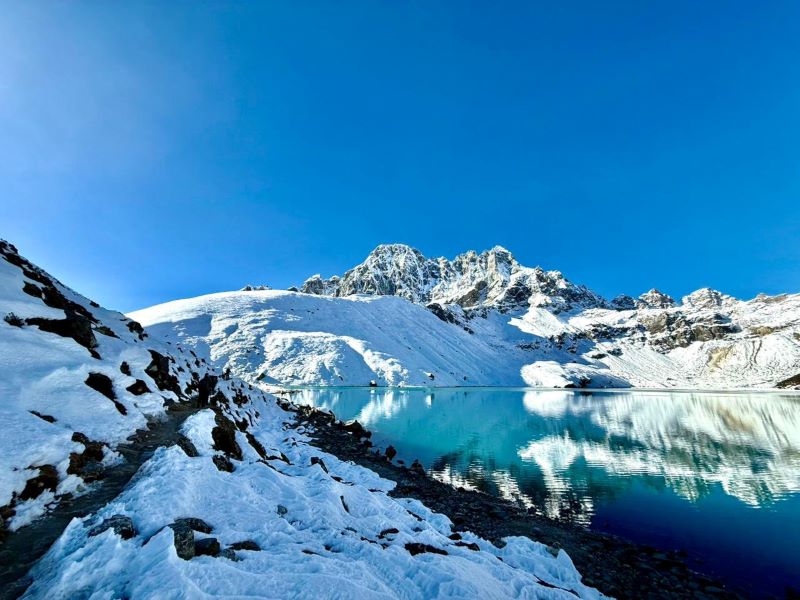
Gokyo Lakes and Gokyo Ri are must see attractions during the Everest Three High Passes Trek. They are both in the hidden Gokyo Valley and provide an entirely different kind of landscape and experience on the trek.
The turquoise colored glacial lakes are surrounded by glaciers and the towering Himalayan peaks while climbing to Gokyo Ri provides a view across the valley. Together they showcase the scenic diversity of the Three Passes route beyond Everest Base Camp.
Gokyo is also strategically important because it is part of the route between Cho La and Renjo La, making the valley a natural highlight and resting point before the final high-pass crossing.
Everest Three High Pass trek Booking
When you confirm or booking 3 pass trek, you will have to pay 25% trip deposit along with the copy of passport. After receiving it, we will send you the final confirmation letter. Click the link below for Booking Terms & Condition
Booking Terms and Condition
Recommended Packing List
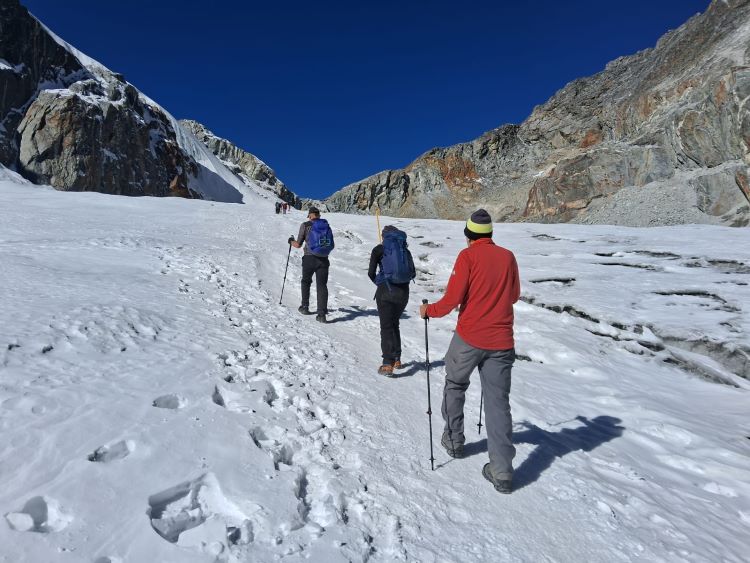
3 pass Trek is one of the challenging trek. We have to walk on the rocky ice and glacier. Proper gearing up is one of the most important things. With the right selection of equipment, trekking can become much easier and enjoyable.
View the List of Trekking Gear.
Trip Map
Frequently Asked Questions
Reviews of Everest Three Passes Trek